Emergency Tree Removal: Safety, Costs, and Coverage
A damaged tree doesn’t always need emergency removal, but it should never be ignored when people or property may be at risk. A fresh trunk split, a large limb caught above a walkway, or roots lifting after a storm can signal an urgent problem. From a safe distance, consider what has changed and what the tree could hit if it moves. Don’t try to test its stability, pull down branches, or start cutting. The safest response depends on the hazard, its location, and whether power lines or structures are involved. Learn what signs call for immediate action and how to stay safe while help is on the way.
Key Takeaways
- Prioritize safety around damaged trees
: Keep people and pets away; call 911 for immediate danger and the utility company for downed wires.
- Let a qualified professional assess the hazard
: Don’t cut, climb, or move damaged trees or debris. Share the tree’s condition, location, and nearby risks when you call.
- Confirm the work and costs before proceeding when possible
: Ask what removal, cleanup, stump grinding, and wood recycling include, and check your insurance policy for coverage and documentation requirements.
When Do You Need Emergency Tree Removal?
A tree problem needs urgent attention when it poses an immediate danger to people, buildings, vehicles, roads, or utility lines. Storms, heavy snow, saturated soil, and strong Front Range winds can cause sudden damage, but a tree can also become unstable after years of decline.
Focus on what has changed and what the tree or limb could hit if it moves. Don’t approach a damaged tree to test its stability. Keep people and pets away, then contact emergency services, your utility company, or a qualified tree care professional, depending on the hazard.
Not every damaged tree needs emergency removal. Some issues can wait for a scheduled arborist assessment or pruning. Natural Tree Care and Recycling offers tree services and arborist consultations for Denver-area property owners who need help assessing a concern.
Recognize Fallen Trees, Split Trunks, and Hanging Limbs
A fallen tree or large limb needs prompt attention if it has landed on a house, roof, vehicle, fence, or outbuilding. A tree blocking a road or driveway can also put drivers and pedestrians at risk. Even when visible damage seems minor, the tree may be under tension and could shift unexpectedly.
A deep trunk split or a large broken limb that remains attached can signal a serious hazard, especially when it hangs above a walkway, entrance, or other place people use. Don’t stand beneath it, pull it down, or try to cut it free. Its weight and position can make it move without warning.
Keep people and pets out of the area, then contact a tree care professional to assess the situation. If the tree has damaged a structure, document the damage from a safe distance and contact your insurer when possible.
Spot Sudden Leaning, Lifted Roots, and Deep Trunk Cracks
A tree that suddenly leans after a storm needs prompt attention, particularly if the soil around it has cracked or the roots are lifting. These signs may mean the root plate is shifting and the tree could fall. Stay clear of the trunk and canopy, and keep vehicles and people out of the potential fall area.
Deep cracks in the trunk, especially near a major fork or alongside a sudden lean, can point to structural damage. A gradual lean that has been present for years is not always an emergency, but a new or worsening lean should be assessed by a qualified professional.
Don’t try to brace, pull, or cut the tree yourself. An arborist can evaluate the visible warning signs and recommend next steps. If there is no immediate threat, Natural Tree Care and Recycling offers arborist consultations and tree care services.
Identify Trees Threatening People, Homes, Roads, or Utilities
A tree’s location matters as much as its condition. A damaged tree near a home, road, sidewalk, or other busy area may need urgent attention because people could enter its fall zone. A similar tree in an isolated part of a property may allow more time for a professional assessment.
Pay special attention to broken limbs hanging above roofs, driveways, or places where people gather. A limb near power lines is especially dangerous. Never touch the limb, the tree, or any object that may be in contact with a line.
If a tree blocks a public road or poses an immediate threat to someone’s safety, contact emergency services or the relevant local authority. For a hazard on private property, call a tree care professional and describe what is at risk. Sharing the tree’s location, visible damage, and nearby structures can help the company understand the situation before arriving.
Distinguish Emergencies From Nonurgent Tree Work
Not every tree that needs attention requires emergency removal. Dead branches, gradual canopy decline, minor storm damage, or a long-standing lean may be appropriate for a scheduled assessment, as long as the tree is not an immediate threat to people or property.
A tree or large limb that has fallen on a structure, a trunk that has split suddenly, or roots lifting after a storm can signal a more urgent hazard. If you’re unsure, keep people away and ask a qualified arborist to assess the tree. Don’t climb it or get close to inspect damage yourself.
Routine care can help identify concerns before they become emergencies. An arborist may spot deadwood, weak branch attachments, or other structural problems during an assessment. Review tree care services for Denver-area properties and ask which work can be scheduled safely.
Call 911 or the Utility Company First When Needed
Call 911 if someone is injured, trapped, or in immediate danger, or if a tree has created a serious hazard on a public road. Don’t enter an area to check on someone if downed wires or unstable debris may be present. Follow instructions from emergency responders.
If a tree or branch has fallen on power lines, or wires are down nearby, stay well back and contact the utility company. Treat every downed line as energized. Keep others away, and don’t touch the tree, a fence, a vehicle, or anything else that may be in contact with the line. Xcel Energy’s emergency guidance explains how to report electrical hazards and outages.
Once responders or the utility company have addressed the immediate danger, contact a tree care professional about the remaining tree and debris. When you call, mention any wires, structural damage, blocked access, or other hazards.
How Can You Stay Safe While Waiting for Emergency Tree Removal?
A storm-damaged or unstable tree can shift without warning. Broken limbs may be under tension, a trunk may roll, and roots lifted from the ground can leave a tree poorly supported. Until a qualified crew assesses the scene, keep your distance and avoid trying to inspect or secure the tree yourself. The same caution applies after the weather clears, since damage may not be easy to spot from a distance.
If the tree is touching a power line, or a line is down nearby, stay well away and call your utility company. Call 911 if someone is injured, trapped, or in immediate danger, or if the tree creates an urgent threat to people or traffic. Once you’re in a safe place, contact a professional tree service and describe the situation. Natural Tree Care and Recycling provides tree care and removal services in the Denver area. Clear details help the crew prepare for the conditions at your property.
Keep People and Pets Away
Keep children, visitors, and pets well away from the damaged tree and the surrounding area. Don’t let anyone walk beneath hanging limbs, approach a cracked trunk, or retrieve belongings from nearby. A tree can move or shed branches with little warning, even if it appears stable.
If the tree is near a sidewalk, driveway, or shared outdoor space, warn others to stay back only if you can do so safely. Keep pets indoors or secure them away from the hazard. Emergency tree service guidance recommends keeping people and animals clear while the situation is assessed. If you’re uncertain where the safe boundary is, stay farther away and wait for the crew or emergency responders to advise you.
Stay Clear of Downed or Nearby Power Lines
Treat every downed power line as live. Stay well away from the line, the tree, and anything touching either one, such as a fence, puddle, or vehicle. Don’t try to move a branch, check the line, or determine whether the power is off. Contact the utility company to report the hazard, and call 911 if someone is in immediate danger.
If a tree has fallen onto a line, do not approach it, even if there is no visible sign of electrical activity. Tree removal safety advice warns that contact with power lines can cause severe injury. Tell the tree service about the line when you call, but leave the area until the utility company or emergency responders confirm it is safe.
Don’t Cut, Climb, or Move Damaged Trees or Debris
Don’t use a chainsaw, ladder, or other tools to work on a damaged tree while you wait. A split trunk or hanging limb may be under pressure, and cutting it can cause it to drop or swing unexpectedly. Climbing the tree or walking beneath a leaning trunk also puts you at risk, even if the damage seems minor.
Leave branches and debris where they are unless emergency responders direct you otherwise. Emergency tree service recommendations advise against cutting, climbing, or moving damaged trees. A trained crew can assess how the tree is supported and plan a safe removal. If it threatens someone or a structure, move away and call 911 rather than attempting a rescue or cleanup yourself.
Move Vehicles Only When Safe
Move a vehicle or outdoor item only if you can do so without going near the tree, fallen branches, or power lines. Don’t drive beneath a hanging limb or through an area blocked by debris. If reaching the vehicle would take you closer to the hazard, leave it in place and tell the tree service where it is.
From a safe location, let the crew know about nearby cars, fences, sheds, and other obstacles that could affect access. This information can help the team plan its work before arriving. If a vehicle is trapped under a tree, don’t try to retrieve it or move branches around it. Wait for the crew to assess the scene and determine how to proceed.
Share the Location and Hazard Details With the Tree Service
When you call, provide the property address and a clear description of what happened. Explain whether the tree has fallen, is leaning, or has split, and whether it is near a building, road, or power line. Mention any injuries, trapped people, or blocked access. Share photos only if you can take them from a safe location.
Also point out nearby hazards, such as hanging limbs or a blocked driveway, without approaching the tree to get a closer look. Clear information helps the crew prepare for the conditions and determine what response is appropriate. If the situation changes while you wait, move farther away and update the service. If anyone is in immediate danger, call 911.
What Does Emergency Tree Removal Include?
Emergency tree removal can involve several steps, from assessing the immediate danger to clearing debris after the tree or damaged limbs are removed. The work varies based on the tree’s condition, where it has fallen or is leaning, and what sits nearby. Before work begins, ask the crew to explain its plan and confirm which services are included in the written estimate. That helps you understand what will happen on site and what may need separate attention afterward.
Assess Hazards and Plan Safe Removal
The crew starts by evaluating the tree and the surrounding area. They look for hazards such as hanging limbs, unstable trunks, broken branches under tension, and nearby buildings, vehicles, or utilities. This assessment helps the team choose an approach suited to the site. For example, a tree close to a home may need to be removed in sections rather than cut at the base. Share what you have noticed, but stay well away from the damaged tree while the crew assesses it. A professional tree care assessment can also help identify concerns that are difficult to judge from the ground.
Remove Trees and Limbs Near Structures
A tree or large limb resting on a roof, vehicle, fence, or outbuilding may need careful removal to avoid adding pressure to the structure or shifting unstable wood. The crew will determine the safest method based on the tree’s position, size, condition, and access to the site. If a damaged tree is near a power line, keep away and contact the utility company. Never try to pull a limb from a structure or cut it yourself. When you call a tree service, describe what the tree has struck and whether any wires or structures are involved. These details help the crew prepare for the conditions they may encounter.
Clean Up Debris and Discuss Stump Grinding
Once the immediate hazard is removed, cleanup may include cutting wood into sections and gathering branches and smaller debris. The amount of cleanup varies, so check whether hauling away logs, branches, and wood chips is included in your estimate or priced separately. Stump grinding is often a separate service, too. It removes the stump to below ground level, but the roots generally remain in place. Ask whether grinding is appropriate for your yard, and mention any access limits or nearby landscaping. Natural Tree Care and Recycling provides a range of tree services, and you can ask which cleanup options fit your situation.
Recycle Wood and Discuss Replacement Trees
After the immediate work is complete, ask what can be done with the removed wood. Depending on its condition and the available options, wood and branches may be chipped or repurposed instead of discarded. Natural Tree Care and Recycling emphasizes sustainable practices, including recycling debris from tree work. If the removal leaves an open space in your yard, you can also discuss whether planting a replacement tree makes sense. Consider the space available, soil and sunlight, and how large the tree will grow. The team can help you explore options for your property and plan for future care. Learn more about Natural Tree Care and Recycling and its approach to tree care.
How Do You Choose a Qualified Local Tree Removal Service?
When a tree poses an immediate hazard, choosing the first company that answers can be tempting. Take a moment to check its credentials, safety practices, and estimate. Clear answers can help you make a safer, more informed decision.
Check Insurance, Applicable Licenses, and ISA Arborist Credentials
Ask for proof of current general liability and workers’ compensation insurance. These policies can help protect you if property damage or a worker injury occurs during the job. Licensing and permit requirements vary by city and county, so check what applies to your property and ask the company to confirm its credentials.
An ISA Certified Arborist has demonstrated professional knowledge of tree care, but certification belongs to an individual, not automatically to every member of a crew. Ask who will assess the tree and oversee the work. You can also ask whether the company holds TCIA Accreditation, a voluntary company-level credential. These tree service credential recommendations offer more questions to ask when comparing providers.
Ask About Safety, Equipment, and Availability
Ask how the crew plans to handle hazards near your tree, such as unstable limbs, buildings, fences, or overhead wires. Find out who will lead the work and what training crew members have in climbing, chainsaw use, and aerial rescue. A professional should be able to explain the safety plan and equipment in straightforward terms.
Confirm when the team can arrive and whether it responds to emergencies outside regular business hours. When you call, describe what happened, the tree’s location, and any nearby structures or utilities. If power lines may be involved, contact the utility company first and keep your distance. Check the company’s tree services page for the work it offers, then ask directly about emergency availability.
Confirm the Estimate, Work Scope, and Cleanup
Ask for a written estimate before approving the work, unless an immediate threat requires urgent action. The estimate should identify which tree or limbs the crew will remove, describe the planned approach, and state what the price includes. Confirm whether hauling and cleanup are part of the quoted cost.
Stump grinding, log removal, and additional pruning may be separate services. Ask about them before work begins, along with how the crew will protect nearby landscaping and what the site will look like afterward. A detailed estimate helps set expectations and gives you a chance to clarify costs before the crew starts. Mayer Tree Service’s guidance on tree service credentials also recommends asking what services and cleanup a quote covers.
Look for Front Range Experience and Clear Communication
Ask whether the company regularly works in your community and understands local requirements, access limits, and disposal options. Front Range conditions, including strong winds, dry periods, and wildfire concerns in some areas, can affect tree care planning. Local experience is useful, but it should go hand in hand with proper insurance, qualified staff, and a clear safety plan.
Notice how the company responds to your questions. A reliable provider should explain the hazard, describe the proposed work, and give you a realistic arrival window. Ask whom to contact if the tree shifts or conditions change before the crew arrives. Natural Tree Care and Recycling serves the Denver area with tree removal, arborist consultations, and other tree care services.
What Affects Emergency Tree Removal Costs?
Emergency tree removal costs depend on the work needed to make the property safe, remove the tree, and handle the debris. A small tree in an open yard usually takes less time and equipment to remove than a large, damaged tree beside a house or utility line. Access, crew availability, and requested cleanup also affect the estimate.
Before approving work, ask the tree service to explain the removal plan and list what the price covers. The following factors can help you understand why estimates vary and what to clarify before the crew begins.
Consider Tree Size, Condition, Location, and Access
A tree’s height, trunk size, and weight affect the labor and equipment needed for removal. A large tree may take longer to dismantle and produce more debris than a smaller one. Its condition matters as well: storm damage, a split trunk, or unstable limbs may require the crew to remove it in sections and take extra care.
The tree’s location and access can change the complexity of the job. A tree in an open yard may be easier to reach than one behind a fence or close to a home, road, or utility line. Limited room for equipment or for lowering branches safely can add time. A professional tree removal assessment can help identify these conditions and inform the work plan.
Account for Urgency, Equipment, and Nearby Structures
Emergency work may call for a faster response than routine tree care, though timing depends on the hazard and crew availability. A tree blocking an entrance or threatening a home may need prompt attention. If anyone is in immediate danger, or a power line is down, contact emergency services or the utility company before calling a tree service.
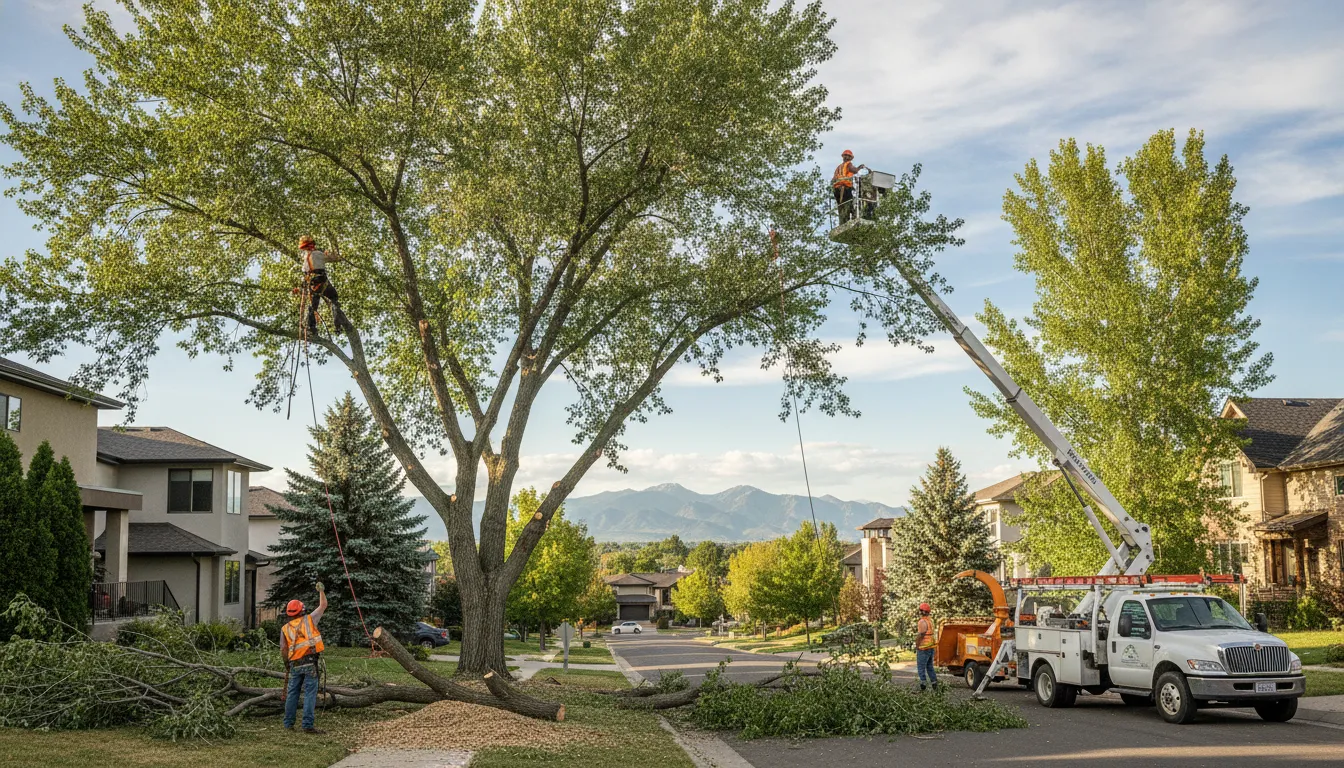
The crew may need specialized equipment, additional workers, or extra precautions to protect nearby structures. For example, a damaged tree over a roof may need to be lowered in controlled sections rather than allowed to fall freely. These steps can add time and resources to the job. When requesting an estimate, describe the hazard, nearby buildings and utilities, and the access route so the service can better assess what the work requires.
Include Cleanup, Stump Grinding, and Other Requested Work
Ask how the crew will handle branches, logs, and other debris. Some estimates include hauling materials away; others may leave wood on the property or list cleanup as a separate charge. If you want the wood removed, left for your use, or cut into manageable pieces, say so when you request an estimate.
Stump grinding is often separate from tree removal, so confirm whether it is included and how it affects the price. You can also ask whether the removed wood can be recycled and whether planting a replacement tree is an option. Natural Tree Care and Recycling offers tree removal and planting services, which may help you plan both the immediate work and what comes next for your landscape.
Get a Written Estimate and Clarify What It Covers
Request a written estimate before work begins. It should describe the removal method, equipment, property protection, and debris handling. Check whether cleanup and stump grinding are included or listed separately. If the crew discovers additional hazards or the scope changes during the job, ask how they will explain any added work and cost before proceeding.
When comparing estimates, look at the services included, not just the total. Confirm who will do the work, where the crew needs access, and how the plan accounts for nearby structures and utilities. A clear scope helps prevent confusion about what will happen on your property. To discuss a tree hazard or request an assessment, contact Natural Tree Care and Recycling.
Does Homeowners Insurance Cover Emergency Tree Removal?
Homeowners insurance may cover emergency tree removal, but the answer depends on the cause of the damage, what the tree struck, and the terms of your policy. Your insurer decides which expenses qualify. If a tree is an immediate hazard, put safety first, then contact your insurer as soon as you can.
Check How Damage and Policy Terms Affect Coverage
A policy may cover tree removal when a covered event, such as a windstorm, causes a tree to damage an insured structure. A tree that falls in the yard without hitting a structure may be treated differently. Policies can also set limits or exclusions for debris removal, so don’t assume the full cost of the job will be reimbursed.
Ask your insurer whether coverage applies to the fallen tree, damaged standing sections, cleanup, and any work needed to prevent further damage. The National Association of Insurance Commissioners’ guide to homeowners insurance can help you understand common policy terms, but your own policy controls. If you’re unsure about a tree’s condition, a professional tree assessment can help identify hazards and explain the work that may be needed.
Document Damage Safely and Contact Your Insurer
Keep people and pets away from the tree, especially if it is split, leaning, or resting on a structure. Stay clear of hanging limbs and any tree near power lines. Never go beneath damaged branches or try to move the tree yourself. If you can do so from a safe location, take photos or video of the tree, the damage, and the surrounding area before cleanup begins.
Contact your insurer to report the damage and ask whether an adjuster needs to inspect the site or approve work before it starts. Share any photos and keep notes about your conversations. If power lines are involved or anyone is in immediate danger, call the utility company or emergency services first. For other hazards, follow practical emergency tree safety guidance and wait for a qualified crew.
Review Deductibles, Coverage Limits, and Approval Requirements
Before authorizing work that can wait, ask your insurer how your deductible applies, whether the policy has a tree-removal limit, and which costs may be covered. Confirm whether you need an inspection or written approval before work begins. Keep the estimate, invoice, photos, and messages with your insurer together for your records.
Ask the tree service for a written scope that separates removal, debris cleanup, and optional stump grinding. This makes it easier to compare the estimate with the expenses your insurer may consider. Also confirm that the company carries appropriate liability coverage, and check with your insurance agent if you have questions about how tree work affects your policy.
What Misconceptions Can Lead to Risky Decisions?
Assumptions can make a tree emergency harder to manage. A tree’s appearance alone can’t confirm whether it’s stable, and removal isn’t always the right response. Look at what has changed, what the tree could hit, and whether people, buildings, roads, or utilities are at risk. When in doubt, keep your distance and ask a qualified professional to assess the situation.
Don’t Assume Every Leaning Tree Needs Immediate Removal
Some trees grow at an angle without posing an immediate danger. A sudden change in a tree’s lean, however, may signal root damage or shifting soil, especially after strong winds or heavy rain. Look for other warning signs, such as lifted soil or newly exposed roots. Keep people and pets away from the area, and avoid making a removal decision based on the angle alone. An arborist can consider the tree’s condition, its surroundings, and the likelihood of failure before recommending removal, pruning, or monitoring. Natural Tree Care and Recycling offers tree assessments and services for property owners who need help evaluating a concern.
Recognize That Healthy-Looking Trees Can Be Unstable
Green leaves don’t guarantee that a tree is structurally sound. Hidden decay, damaged roots, trunk cracks, or weak branch connections may affect stability even when the canopy looks healthy. After a storm, check from a safe distance for fresh cracks, fallen branches, mushrooms near the trunk, or disturbed soil. Don’t approach a tree that may fall or drop limbs. If you notice signs of damage, arrange a professional assessment. Regular inspections can also help identify concerns before they become urgent. Tree maintenance guidance highlights the value of catching potential problems early.
Avoid DIY Cutting That Could Worsen the Hazard
A damaged limb or tree can shift, fall, or spring back unexpectedly when cut. The risk is especially high when branches are under tension, tangled with other limbs, or close to a home or power line. Don’t climb the tree, use a chainsaw on damaged wood, or try to pull down a hanging limb. Keep people and pets well back, then contact a professional tree service. If a tree or branch has contacted a power line, stay clear and call the utility company. A qualified crew can assess the hazard and choose an appropriate removal method. Tree removal safety advice can help explain why DIY work may create additional risks.
Expect Costs, Response Times, and Coverage to Vary
Emergency tree service costs depend on factors such as tree size, damage, access, nearby structures, equipment needs, and debris cleanup. Response times can vary with weather, demand, and the severity of the hazard. Before authorizing work, ask what the estimate covers, whether cleanup is included, and whether stump grinding is separate. Homeowners insurance also varies by policy and the circumstances of the damage. Photograph the scene from a safe location, contact your insurer, and ask what documentation or approval it requires. Don’t assume every removal will be covered. Because tree removal costs vary, clarify the work scope and charges before proceeding when the situation allows.
How Can You Reduce the Risk of a Tree Emergency?
You can’t prevent every tree failure, especially during severe weather, but regular care can help identify hazards before they become urgent. Watch for changes such as new cracks, dead branches, or a sudden lean, and ask an arborist to assess anything that concerns you. The right response may be pruning, pest management, monitoring, or removal.
Denver-area trees also face dry conditions, strong winds, and wildfire risk. Routine maintenance can address hazards while supporting tree health. Natural Tree Care and Recycling offers arborist consultations and other tree services for Front Range properties.
Schedule Arborist Assessments for Concerning Trees
If a tree develops a new lean, visible cracks, thinning foliage, or large dead limbs, arrange an assessment with a qualified arborist. They can evaluate the tree’s structure, health, and surroundings, then recommend next steps. A concerning tree doesn’t always need removal. Pruning or monitoring may be appropriate, depending on the risks.
Consider scheduling an assessment after severe weather or when you notice a change that wasn’t there before. Regular checkups can help catch developing problems early, before they require urgent work. The International Society of Arboriculture’s tree care guidance explains what to look for when hiring a tree care professional. When you call, describe what has changed, when you noticed it, and whether branches or roots appear to have shifted.
Address Dead Limbs, Structural Defects, and Pest Issues
Dead branches, cracks in the trunk, weak branch attachments, and signs of pests or disease can all affect a tree’s condition. Don’t rely on appearance alone to determine the risk: different problems can look alike, and the safest solution depends on the tree and what’s nearby. Ask an arborist to inspect concerns, especially when a tree or branch is close to a home, driveway, sidewalk, or play area.
Depending on the findings, care may include pruning, pest management, monitoring, or removal. Avoid climbing or cutting large limbs yourself. Damaged branches can shift without warning, and improper cuts may create new hazards. When requesting an assessment, share photos from a safe distance and describe any changes you’ve noticed. A professional can explain the options and help you decide what needs attention first.
Consider Pruning and Fire Mitigation for Front Range Conditions
Proper pruning can remove dead or damaged branches and help maintain a tree’s structure. In wildfire-prone areas, fire mitigation may also involve managing vegetation and branches near buildings. The right approach depends on your property, tree species, and local conditions. An arborist can recommend practical work without removing healthy growth unnecessarily.
Plan maintenance before fire season, and check trees after storms for broken or hanging limbs. The Colorado State Forest Service’s wildfire mitigation guidance offers information for property owners managing fire risk. For help with trees on your property, Natural Tree Care and Recycling provides pruning and fire mitigation services. Ask which tasks address immediate hazards and which can be scheduled as part of ongoing care.
Related Articles
Frequently Asked Questions
Should I call a tree service or emergency responders first? Call 911 if someone is injured, trapped, or in immediate danger, or if a tree creates a serious public-road hazard. If a tree or branch is touching a power line, contact the utility company and stay well away. For hazards on your property that don’t require emergency responders, contact a qualified tree care professional.
Can I remove a storm-damaged branch myself? Avoid cutting, climbing, or pulling down damaged branches. They can shift unexpectedly, and chainsaw work near a damaged tree can cause serious injury. Keep people and pets away, then let a trained crew assess the situation.
Does every leaning tree need to be removed? No. A long-standing lean may not signal immediate danger, while a sudden lean or lifted roots after a storm can indicate instability. An arborist can assess the tree’s condition and location to recommend removal, pruning, or monitoring.
What information should I share when requesting emergency tree service? Give the property address and explain what happened, where the tree is, and what it may have struck or could reach. Mention nearby structures, blocked access, and any power lines. Share photos only if you can take them from a safe distance.
Will homeowners insurance pay for emergency tree removal? Coverage depends on your policy, the cause of the damage, and whether the tree hit an insured structure. Contact your insurer to ask about coverage, documentation, and approval requirements. Keep the estimate, invoice, and any photos you take safely.