Tree Removal Cost in Denver: What to Budget
A neighbor’s tree removal bill might seem like a useful guide, but it won’t necessarily predict your own tree removal cost. Even trees of similar size can need different equipment, crew time, and removal methods. A tree beside a house may require careful section-by-section work, while limited access or a steep slope can add complexity. Before you accept a quote, find out exactly what it includes, from stump grinding to debris hauling and cleanup. This guide breaks down common cost factors for Denver-area property owners and shares practical questions to ask, so you can compare estimates based on the same scope of work.
Key Takeaways
- Treat cost ranges as a starting point
: Tree size, condition, access, and nearby structures all affect your Denver-area estimate.
- Compare written quotes by scope
: Check whether each includes stump work, hauling, cleanup, equipment, and site protection, then verify insurance and crew qualifications.
- Plan for the tree’s next steps
: Confirm how debris will be handled, and ask an arborist about replacement planting if you want to add a tree.
What Does Tree Removal Cost in Denver?
Typical Front Range prices by job scope
Tree removal in Denver can cost roughly $200 to $5,000 or more. A small tree with clear access may be closer to the lower end, while a large tree or a removal that needs extra crew time, careful rigging, or specialized equipment can cost much more. National cost guides put small-tree removals around $150 to $400, with larger trees often exceeding $1,000, according to Angi’s tree removal cost guide.
Use these figures to set an initial budget, not as a quote for your property. Estimates can also differ based on whether stump grinding, hauling, and cleanup are included. When you contact a tree care company, share the tree’s location and condition, and ask what the proposed work covers. An on-site assessment can help define the scope and provide a more useful estimate. Natural Tree Care and Recycling offers tree services and consultations for Denver-area property owners.
How local estimates compare with national averages
A published estimate for professional tree removal in the Denver area ranges from about $385 to $1,070, close to the national average of roughly $850 per tree. Lawn Love’s tree removal cost guide provides a helpful comparison, but average prices cannot account for the details of a particular tree or property.
Height is only one factor. A smaller tree beside a home may require more planning and labor than a taller tree in an open yard. Tree condition, nearby structures, equipment access, and debris handling can all affect the price. Use local and national figures as a starting point, then request an on-site estimate based on the tree, property, and services you need. That gives you a clearer budget before scheduling the work.
Why written estimates beat price averages
A written estimate spells out the work planned for your property, making it easier to compare providers fairly. Ask whether the price includes cutting and lowering the tree, stump grinding, hauling, and final cleanup. If you’re removing several trees, confirm whether the estimate lists each tree separately or prices the work as a combined project.
Request estimates from qualified companies and compare the scope as well as the total. Check that the company has appropriate insurance, and ask who will handle permits or utility coordination if needed. A homeowner’s guide to tree removal costs also recommends comparing written estimates instead of relying on averages alone. If a bid is much lower than others, ask what it excludes before making a decision.
How Tree Size Affects Removal Costs
A tree’s height can help you estimate removal costs, but it is only one part of the picture. Taller trees often take more time and may need additional crew members or specialized equipment. Trunk diameter, branch density, tree condition, and access to the work area can all affect the estimate.
The ranges below are general budgeting references, not guaranteed Denver prices. Local costs depend on the tree and the work required, so an on-site assessment is the best way to get an accurate quote. Natural Tree Care and Recycling offers tree removal and other tree care services across the Denver area.
Small trees: under 30 feet
A tree under 30 feet may take less time and require simpler equipment to remove than a larger tree. One published estimate places small-tree removal between $150 and $500. Use this small-tree cost range as a general reference, not a prediction of what removal will cost at your property.
The location and condition of the tree can change the work involved. A small tree in an open yard may be straightforward to remove, while one beside a fence, home, or utility line may need more careful handling. Ask whether the quote covers hauling, cleanup, and stump work, since these services may add to the total.
Medium trees: 30 to 50 feet
Medium-sized trees can require more time and planning, especially if branches and trunk sections need to be removed piece by piece. A published estimate for trees between 30 and 80 feet is $500 to $3,000.
Ask how the crew will manage branches and trunk sections. A tree with room around it may be easier to remove than one growing over a roof, fence, or driveway. Confirm whether the estimate includes debris removal and stump services so you can compare quotes that cover the same work.
Large trees: over 50 feet
Large trees often call for more crew time, careful planning, and specialized equipment. Published estimates for trees over 50 feet can exceed $5,000, though the actual cost depends on the tree and property.
When space is limited or branches extend over structures, the crew may need to dismantle the tree in sections. Some jobs may also require equipment such as a crane. Ask the estimator to explain the removal method and list any equipment charges. It is also helpful to clarify whether hauling, chipping, and cleanup are included.
How trunk size, branches, and wood weight affect labor
A tree’s height does not show how much material the crew must handle. A wider trunk may take longer to cut and require heavier equipment. Dense branches add time, while heavy wood sections may need to be lowered carefully or moved through a restricted area.
The tree’s condition and surroundings matter, too. Dead, damaged, or unstable trees may need a more cautious approach. Nearby homes, fences, roads, and utility lines can also limit how crews remove and lower branches. Ask the estimator which details are affecting your quote and how the proposed plan addresses them.
What Affects Tree Removal Estimates?
A tree’s height is only one part of a removal estimate. Its condition, location, and the layout of your Denver-area property can all affect the crew, equipment, and time needed. When you request a quote, ask the estimator to explain how these details shape the proposed work.
Tree condition: healthy, dead, diseased, unstable, or storm-damaged
A healthy tree may be more predictable to assess, but its size and location still determine how the crew can remove it safely. Dead, diseased, or unstable trees can be less predictable. Branches may break without warning, or the trunk may not support typical climbing methods. Storm damage can add complications, especially when limbs are split or the tree is leaning.
These conditions may require extra rigging, specialized equipment, or a different removal plan. Share any visible cracks, decay, leaning, or recent storm damage when requesting an estimate. A professional arborist assessment can help identify risks and clarify the safest approach.
Species, structure, and damage
Species can affect how a crew plans a removal. Wood density, trunk shape, and branching patterns all influence how a tree can be cut and lowered. A broad canopy or several large limbs may take more time to dismantle than a simpler tree of similar height. Existing damage, such as cracks, decay, or broken branches, can also change how the work needs to be done.
The species and structure of a tree may influence the equipment, crew, and time required. Point out visible defects when you request an estimate, and ask how the removal plan accounts for them. That context makes it easier to compare quotes based on the work each one includes.
Proximity to homes, fences, roads, and utility lines
A tree close to a house, fence, driveway, road, or utility line often needs to be removed in sections. Instead of felling it in one direction, the crew may need to lower branches and trunk pieces carefully to protect nearby property. This can involve more time, rigging, or specialized equipment.
Point out features that may be hidden from the street, such as a shed, garden, or narrow side yard. If utility lines are nearby, ask who will contact the utility provider and what needs to happen before work begins.
Access, slopes, obstacles, and equipment needs
The route from the street to the tree matters. Narrow gates, steps, retaining walls, soft ground, and steep slopes can make it harder to bring equipment onto the property or move debris out. Limited access may require smaller machinery or more manual handling, which can add time to the job.
Crews also need to account for landscaping, irrigation, and other features that may need protection. Site conditions help determine the equipment and safety measures required, as described in this tree-work safety guidance. If possible, walk the property with the estimator and point out access limits before comparing quotes.
Emergency timing and weather urgency
A scheduled removal gives a company time to plan crew availability, equipment, and site logistics. After a storm, a damaged tree may need urgent attention, particularly if it is blocking access or threatening a structure. Emergency work can involve different scheduling and safety needs, which may affect the estimate.
Weather can also change when crews can work safely. High winds, snow, or icy conditions may delay a job or require a return visit. If a tree has fallen or appears unstable, keep people away and contact a qualified tree care professional. Since [emergency removal costs] vary with the damage and urgency, ask which work needs immediate attention and what can be scheduled later.
How Denver’s Conditions Affect Costs
Tree removal costs can vary across the Denver area, even for trees that appear similar. The amount of room to work, the shape of the property, access for equipment, and timing all affect how a crew plans the job. An on-site assessment helps account for these details and gives you a quote based on your property, not a general price range.
Workspace in urban yards and rural properties
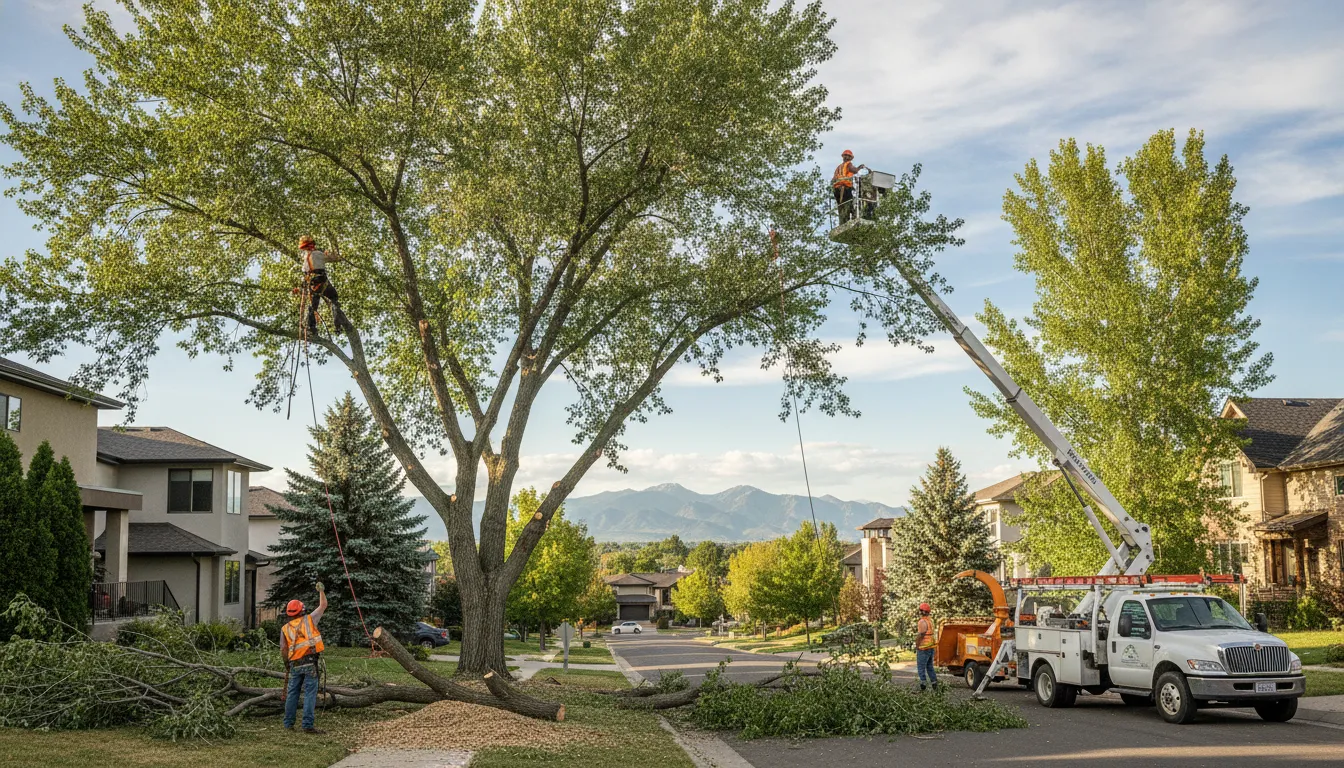
In a Denver neighborhood, a tree may sit close to a house, fence, sidewalk, or utility line. With limited room to work, a crew may need to remove branches in smaller sections and lower them carefully to protect nearby property. Some jobs also call for specialized equipment, such as a crane. Trees near buildings and power lines may need additional precautions, which can affect the estimate.
Rural properties may have more open space, but access can be a challenge. Narrow gates, long distances from the road, or uneven ground can make it harder to bring in equipment and remove debris. Point out these conditions when you request an estimate so the crew can plan for the work area.
Front Range terrain, access, and equipment logistics
Front Range properties range from level city lots to sloped or uneven sites. A slope can make it harder to position equipment and control where branches or trunk sections land. If a truck or chipper cannot get close to the tree, workers may need to move debris farther by hand, adding time to the job.
The quote may also account for equipment needed to work safely around buildings, utilities, or landscape features. Access, nearby structures, and sloped ground can affect removal costs. Ask the arborist to explain any equipment or site-preparation charges, and confirm how the crew plans to protect lawns, paving, and other parts of your property.
Seasonal demand and weather-related scheduling
Timing can affect availability and cost. After a storm, a damaged or unstable tree may need urgent attention. Emergency work can require a quick response and involve added safety risks, which may affect the estimate. If the tree is not an immediate hazard, ask whether there is flexibility in the schedule.
Winter may be an option for non-urgent work, but it is not always less expensive. Lower seasonal demand may make scheduling easier, while snow, frozen ground, or limited access can complicate the job. Seasonal demand can influence tree removal costs, so ask for a quote based on your property and the safest workable timing.
Why nearby properties can have different costs
A neighbor’s bill can offer a point of comparison, but it cannot predict the cost of your removal. Trees of similar height may differ in trunk size, branch structure, condition, and the space around them. A dead, diseased, or storm-damaged tree may also call for a different work plan than a healthy one.
The layout of each property matters, too. A tree with open space around it may be simpler to remove than one wedged between a garage, fence, and overhead lines. Species and root structure can affect the work as well. Published estimates range from about $150 for small trees to more than $2,000 for large or complex jobs, but an on-site assessment is more useful for budgeting. A local tree care professional can evaluate the tree, access, and site conditions before providing a written estimate.
What Extra Tree Removal Costs Should You Budget For?
The removal price may not include every task you’ll want completed. Stump work, hauling, equipment, permits, and replacement planting can affect your final bill. Ask for an itemized estimate that spells out what the crew will do, what materials they’ll remove, and which services cost extra. This makes it easier to compare quotes on equal terms.
Costs depend on the tree, the site, and your plans for the wood and chips. A tree in an open yard may require a different approach from one beside a home or utility line. Denver-area property owners can ask about responsible debris handling and replacement options when discussing tree removal and related services.
Stump grinding or removal
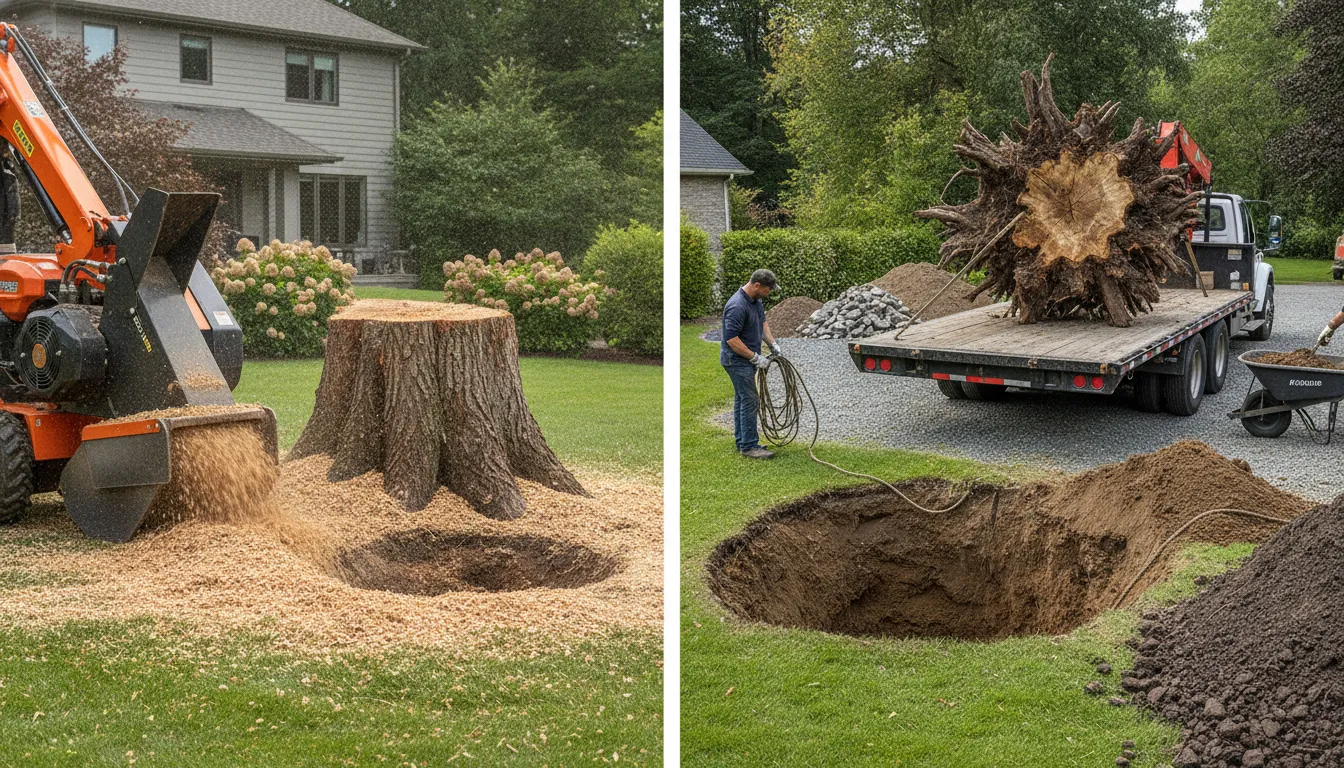
Once the tree is down, decide whether you want the stump left in place, ground below the soil surface, or fully removed. Grinding is a common option and is usually faster and less expensive than removing the stump and major roots. One cost guide puts stump removal at roughly $100 to $500, but the price at your property depends on the stump’s size, location, root spread, and access.
Ask whether grinding includes filling the hole with chips or soil, and whether surface roots are included. Full removal can disturb more of the surrounding landscape. If you plan to plant nearby, discuss the stump and root plan with an arborist first.
Chipping, hauling, cleanup, and disposal
Branches may be chipped on site, while larger logs could be cut into sections, left for you, or hauled away. Each option affects cleanup and the work included in the estimate. Ask whether the quote covers removing all debris from your property, or whether hauling, log splitting, or additional cleanup costs extra. Get the details in writing so there’s no confusion after the crew finishes.
Consider what you’d like to keep. Wood chips can be useful for paths or garden beds, and some logs may be cut for firewood. If you don’t want to reuse the material, confirm that removal and disposal are included. You can also ask whether the company recycles wood and branches, rather than treating them as waste.
Cranes and specialized equipment
A tree in a tight space or close to a building may require specialized equipment and careful planning. For example, a crew might use a crane to lift sections over a roof or fence. Steep slopes, rough terrain, narrow gates, and limited room for equipment can also affect labor and costs. These site conditions may change the removal plan, so ask the estimator to assess them in person when possible.
Request an explanation of the planned equipment and any related charges. Make sure the estimate accounts for features such as overhead lines, driveways, gardens, and nearby structures, along with how the crew will protect them during the work.
Permits, utility coordination, and site protection
Permit rules depend on your location and the tree. Some cities require approval before removing large or protected trees. Ask who will check local requirements and whether the estimate includes permit fees or application work.
Trees near utility lines may also require coordination with the utility company. Clarify who will arrange it and whether that work could affect the schedule or price. Before booking, discuss how the crew will protect nearby roofs, fences, driveways, and planting beds. A written estimate should explain what site preparation and protection are included, as well as any circumstances that could add charges.
Arborist assessments, follow-up care, and replacement planting
If you’re unsure whether a tree needs to come down, an arborist can assess its condition and discuss alternatives such as pruning or treatment. Ask whether the consultation is included in the estimate or billed separately. Natural Tree Care and Recycling offers arborist consultations and tree care for Denver-area properties.
After removal, consider whether nearby trees need attention and whether you want to plant a replacement. The right species depends on the space, soil, and growing conditions, so ask about recommendations, planting costs, and care guidance. You can also ask how the crew handles the removed tree. Some tree care companies recycle wood and branches for other uses, such as chips or compost, instead of sending all debris for disposal.
How to Compare Tree Removal Quotes
A tree removal quote should make it clear what you’re paying for, how the crew plans to do the work, and what will happen to the tree debris afterward. Prices are hard to compare when one estimate includes stump grinding and hauling while another only covers cutting down the tree. Ask each company to price the same work, then review the details alongside the total.
Share the same information with every company: the tree’s location and condition, nearby buildings or fences, access limitations, and what you’d like done with the wood and chips. An in-person assessment can help the contractor account for site conditions that are easy to miss in a photo. Natural Tree Care and Recycling describes its tree services, including tree removal and related care, so you can see what types of work to ask about.
A clear estimate should explain the removal plan, included services, exclusions, and circumstances that could change the cost. Use the following questions to compare more than the bottom line.
Request itemized estimates for the same work
Ask each company for a written estimate that identifies the tree or trees and lists the work included. The quote should distinguish removal from services such as stump grinding, hauling, and cleanup. If a line item is unclear, ask what it covers before comparing the total with another bid.
Make sure each company knows about conditions that could affect the job, such as a narrow gate, steep slope, nearby roof, or limited space for equipment. Explain whether you want logs or chips left on-site or removed. These details can change the crew’s time and equipment needs.
Ask whether the quoted price is fixed and what could lead to additional charges. For example, find out how the company would handle unexpected conditions discovered during the work. Getting the scope and possible extra costs in writing helps prevent misunderstandings later.
Confirm stump work, debris removal, and cleanup
Clarify what “tree removal” means in each estimate. Some companies cut the trunk close to the ground; others include stump grinding. If grinding is included, ask how deep it will go, whether surface roots are part of the work, and what happens to the resulting chips. If you hope to replant in the same spot, mention that before the estimate is finalized.
Ask what the crew will do with branches, logs, leaves, and sawdust. The company may chip branches, haul everything away, or leave some wood for you. Confirm whether cleanup includes clearing debris from the lawn, driveway, and paths, and whether the crew will rake the work area.
You can also ask whether usable wood or chips can be reused or recycled. Sustainable debris handling may suit your preferences, but make sure the estimate states what will be taken, what will remain, and whether those choices affect the price.
Verify insurance, crew qualifications, and permit responsibilities
Before hiring, ask for current proof of liability insurance and workers’ compensation coverage. Tree work can involve falling limbs, heavy equipment, and nearby property, so confirm that coverage is in place rather than relying on a verbal assurance. The Tree Care Industry Association’s consumer guidance recommends checking a company’s credentials, insurance, and references.
Ask who will supervise the crew and what training or certifications they have. An ISA Certified Arborist can provide informed advice about tree health and removal decisions. You can verify an arborist’s credential through the International Society of Arboriculture. Credentials are useful, but they don’t replace insurance or a clear written plan.
Also ask who is responsible for checking permit requirements and contacting utility providers if needed. Requirements can vary by location and job, so confirm responsibilities with the company and the relevant local authority before work begins.
Compare removal plans and equipment, not just prices
Ask each company to explain how it plans to remove the tree and protect the surrounding area. Depending on the tree and site, a crew might lower sections with ropes, use a bucket truck, or bring in a crane. The right approach depends on factors such as tree condition, access, and nearby homes, fences, gardens, and utilities. A professional should be able to explain why the plan fits your property.
Compare equipment needs and access requirements across estimates. Specialized equipment can add to the cost, but may be appropriate for a large tree or a confined yard. Ask what each piece of equipment will do and whether the estimate includes its delivery and use.
It’s also reasonable to ask how the crew will keep people and property away from the work zone.
Ask about bundled services and multi-tree pricing
If more than one tree needs attention, request a price for each tree and a separate estimate for completing the work as a group. A company may be able to plan crew time and equipment more efficiently for multiple trees in one visit. Ask whether that changes the overall cost, and check that the combined quote still explains the work planned for each tree.
You can also ask whether services such as stump grinding, pruning, or debris hauling can be completed during the same visit. Bundling may reduce repeat trips, but it only makes sense when the added services meet your needs. For instance, you may want the stump ground if you plan to use the space, while hauling logs may matter if you don’t want wood left on the property.
Request both individual and bundled prices in writing. That gives you a clear way to compare options and choose only the services you want. Before accepting a package, confirm that it includes the same cleanup, disposal, and site protection you’re comparing in other estimates.
Watch for vague scopes, pressure, and unusually low bids
Pause if an estimate only says “remove tree” without explaining whether stump work, hauling, or cleanup is included. Ask for a more detailed scope and written terms before agreeing. A professional company should be prepared to explain its plan and answer reasonable questions. Reluctance to provide proof of insurance or pressure to sign immediately are reasons to take more time.
A much lower bid isn’t automatically a poor choice, but find out why it costs less. The estimate may exclude services another company included, or it may not account for difficult access or site protection. Ask the contractor to confirm the full scope, list exclusions, and explain what might add to the final bill.
Don’t make price your only consideration when a tree is near a home, road, or power line. Ask each company about crew safety, equipment, and how it will protect people and property. The National Institute for Occupational Safety and Health’s tree-trimming guidance describes serious hazards associated with this work. Compare the written plan and qualifications as carefully as the total.
How Tree Removal Costs Relate to Safety and Common Misconceptions
Tree removal costs reflect the work needed to bring a tree down safely, protect nearby property, and handle the debris. A low quote may not include every step, and a typical price range can’t account for the conditions on your property. Understanding the risks and asking clear questions can help you compare estimates and plan for the full job.
Why DIY removal risks injury and property damage
Removing a tree takes more than a chainsaw. A crew needs to assess the tree’s lean, condition, and branch structure, then plan how to lower sections without putting people or nearby property at risk. Without the right training and equipment, it can be difficult to predict where a limb or trunk section will fall. A mistake can cause serious injury or damage a roof, vehicle, fence, or landscape.
DIY costs can also add up if you need to rent equipment, remove heavy debris, or hire a professional to address an unsafe or unfinished job. Piekarski Tree’s tree removal safety tips explain why preparation and suitable gear matter. When reviewing an estimate, ask what safety measures, cleanup, and debris handling it includes.
When trees near structures or power lines need professional assessment
A tree close to a home, garage, fence, road, or utility line may need to be removed in sections rather than felled in one direction. That approach can require additional crew time, rigging, or specialized equipment. These details affect the estimate, but they also help limit the chance of damage to structures and surrounding areas.
Power lines require particular caution. Never prune or remove branches near energized lines yourself. Contact your utility provider and a qualified tree care company to determine the right next step. Safety guidance for tree work near power lines stresses the need for trained professionals. An arborist can assess the tree and explain the work involved. Natural Tree Care and Recycling provides tree services and arborist consultations for Denver-area property owners.
What insurance may cover and what to confirm
Insurance coverage depends on your policy and the circumstances surrounding the tree removal. A fallen tree that damages a covered structure may be handled differently from a tree that falls in the yard without damaging property. Your policy may also set a limit on how much it will pay for removal, so don’t assume the full estimate will be covered.
Before scheduling work, call your insurer to ask what your policy covers, whether a payment limit applies, and what documentation you’ll need. The Tree Care Industry Association’s overview of insurance misconceptions explains why it’s important to confirm the details directly. Share any claim requirements with your tree care company, and keep copies of the estimate, photos, and invoices for your records.
When permits or local rules may apply
Permit requirements can depend on your property’s location, the tree, and whether it stands near a public right of way or utility infrastructure. Rules may differ between Denver and nearby Front Range communities. Neighborhood covenants or other local restrictions may also apply, even when a tree is on private property.
Check with your city or county before work begins, and ask your tree care company whether permits or utility coordination may be needed. Confirm who is responsible for handling those steps, since delays can affect scheduling and costs. If the property includes multiple trees or wooded areas, consider how removal will affect the site and what should happen to the debris.
Why costs vary by tree and property
Two trees that appear similar may require very different removal plans. Height and trunk size matter, but so do the tree’s health, branch structure, and location. A dead, damaged, or unstable tree may call for extra precautions. A healthy tree beside a home may also require careful, section-by-section removal to protect the structure.
Access shapes the job, too. A narrow gate, steep slope, nearby landscaping, or limited room for equipment can add labor or change which tools a crew can use. That’s why online price ranges are useful for early budgeting but can’t replace an assessment of your property. Ask for a written estimate that describes the removal approach, debris handling, cleanup, and any additional services. Comparing the same scope of work makes it easier to understand differences between quotes.
Reuse Debris and Replace Removed Trees
When comparing tree removal estimates, look beyond the cost of cutting the tree. Ask what happens to the wood and branches, what cleanup is included, and whether you want to plant a replacement. Clear answers help you understand the full scope of the work and plan for your property.
Ask whether crews reuse or recycle wood, chips, and branches
Before approving an estimate, ask how the crew will handle the tree after removal. Depending on its condition and the company’s practices, wood may be cut into logs, while branches and smaller pieces may be chipped or composted. Diseased or damaged material may have fewer reuse options.
If you want to keep some of the material, specify what you’d like and where the crew should leave it. Ask whether logs will be cut to a usable length and whether chips can be left on-site. If you’d rather have everything hauled away, confirm that too. Reuse options vary, so agree on the plan in advance. This overview of tree removal and recycling options explains how wood and debris may be put to use.
Clarify how debris handling affects the estimate
The way debris is handled can affect labor, equipment, and hauling costs. Leaving logs or chips on-site may require less hauling than removing all material, but the price depends on the tree, access, and cleanup requested. Ask whether the estimate includes chipping, hauling, stump grinding, and cleanup, and request any optional services as separate line items.
If you plan to keep wood or chips, explain how you intend to use them. Logs may need to be cut to a particular length, and a large pile of chips may need a designated drop location. These details help the crew plan the work and give you a clearer estimate. Tree care companies may also have recycling or composting plans, as described in this guide to sustainable tree care practices.
Choose a suitable replacement tree
If you plan to replant, choose a tree that suits the space and growing conditions, not just one that looks appealing at the nursery. Consider sunlight, soil drainage, water needs, and the tree’s mature height and spread. Check its proposed location against buildings, sidewalks, overhead lines, and underground utilities.
A local arborist can help you select a species suited to your property and recommend where to plant it. Ask whether replacement planting is included in the removal estimate or priced separately, and confirm whether the work covers delivery, planting, and cleanup. A well-matched tree is more likely to establish successfully and fit the site as it grows. For more guidance, see these tips on [choosing a replacement tree] ask a Denver-area tree care professional about options for your property.
Frequently Asked Questions
How much should I budget for tree removal in Denver? As a starting point, budget roughly $200 to $5,000 or more. The actual price depends on the tree’s size and condition, access to the work area, nearby structures, and the services included. An on-site estimate is the best way to get a price for your property.
Does a tree removal quote include stump grinding and cleanup? Not always. Some estimates cover only cutting down the tree, while others include stump grinding, hauling, and cleanup. Ask for an itemized written quote that lists what’s included and any optional work.
Why might a smaller tree cost more to remove than a larger one? A smaller tree in a tight space, near a home, fence, or utility line, may require careful section-by-section removal. Limited equipment access or a damaged, unstable tree can also add time and planning.
Do I need a permit to remove a tree in the Denver area? Requirements vary by city, county, tree, and location. Check with your local authority before scheduling work, and ask the tree care company who will confirm permit requirements or coordinate with utility providers.
Can the removed tree be recycled or used on my property? Possibly. Logs may be left for firewood, and branches can sometimes be chipped for mulch. Ask the company what reuse or recycling options are available and make sure your preferred debris plan appears in the estimate.