ISA Arborist: What They Do and How Certification Works
A leaning tree, thinning canopy, or cluster of dead branches can leave you wondering what to do next. An isa arborist can assess the tree, explain what they see, and discuss care options that fit its condition and location. The ISA Certified Arborist credential shows that a professional has passed an exam covering core arboriculture topics, but it doesn’t guarantee a particular result or replace relevant hands-on experience. If you’re comparing tree care providers in the Denver area, learn what certification means, what questions to ask, and how to choose a professional who understands your goals. A clear conversation can help you make informed decisions about pruning, pest concerns, removal, or planting.
Key Takeaways
- Verify credentials and experience
: ISA certification shows tested arboriculture knowledge, so also ask about relevant field experience, insurance, and work references.
- Request a clear, tree-specific assessment
: Ask the arborist to explain findings and compare care options based on your tree, property, and priorities.
- Confirm project details in writing
: Review the work plan, safety measures, cleanup, and debris handling, and discuss replacement planting if removal is needed.
What Is an ISA Certified Arborist?
An ISA Certified Arborist is a tree care professional who has met the International Society of Arboriculture’s eligibility requirements and passed an exam on topics such as tree biology, diagnosis, maintenance, and safety. For Denver-area property owners, the credential can be a useful starting point when comparing tree care professionals, but it’s important to understand what certification does and does not tell you.
What the ISA credential shows—and doesn’t
The credential demonstrates that an individual has tested knowledge in key areas of arboriculture. The ISA’s Certified Arborist program is accredited by the ANSI National Accreditation Board, and credential holders must follow the ISA Code of Ethics.
Certification is not a guarantee of the quality of a particular job or recommendation. It also doesn’t confirm that an arborist has experience with your tree species, site conditions, or specific concern. Ask how they would assess your tree, what options they recommend, and why. The TreesAreGood guide to hiring an arborist offers more questions to consider before hiring.
How certification differs from titles, licenses, and experience
“Arborist” describes someone who works with trees, but the title alone doesn’t confirm a particular level of training. ISA certification is a professional credential, not a business license. Licensing and other legal requirements depend on the location and type of work, so check which rules apply to your project.
Certification also doesn’t establish how much hands-on experience someone has with climbing, equipment, pruning a particular species, or complex removals. Ask about relevant field experience and who will carry out the work. A qualified professional should be able to explain the plan clearly, including how it considers tree health, property safety, and your goals.
What Does an ISA Arborist Do?
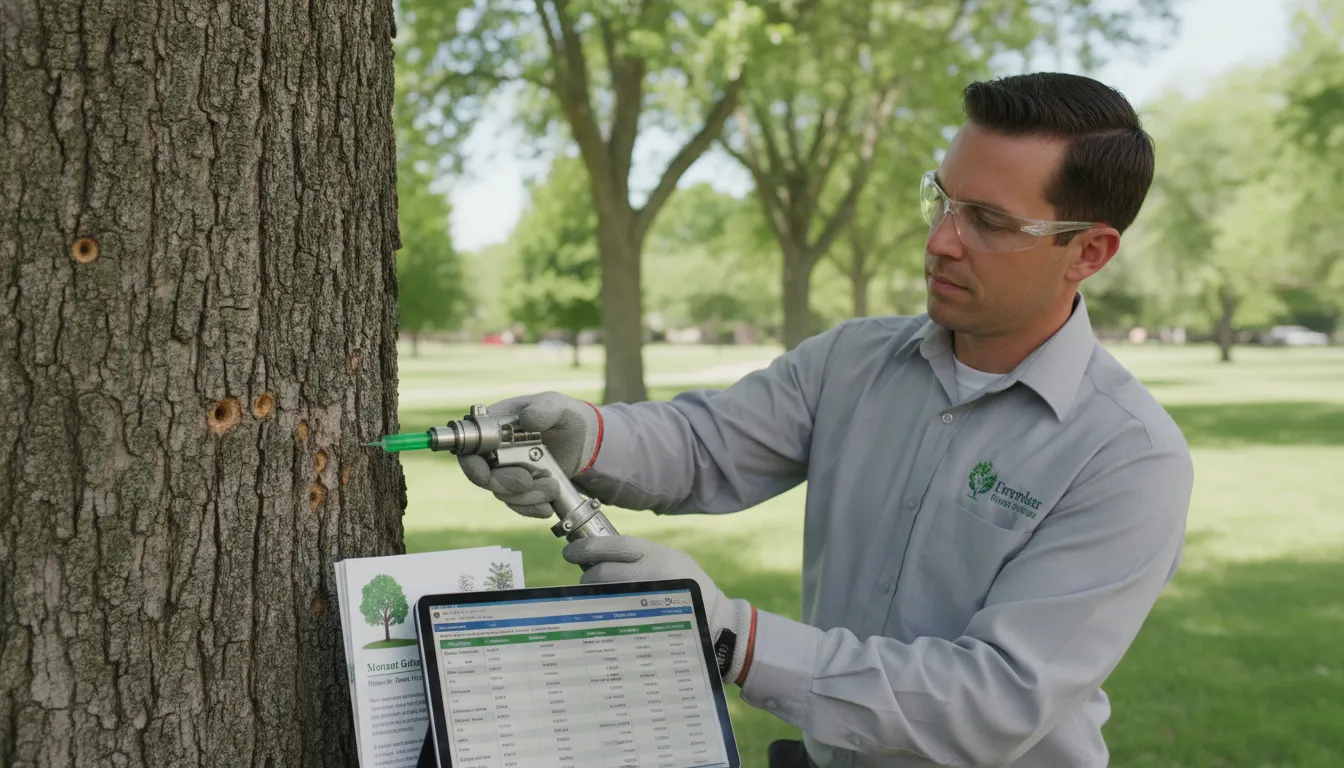
An ISA Certified Arborist uses professional tree-care knowledge to assess trees and recommend appropriate care. That may include checking a tree’s health and structure, investigating signs of pests or disease, and explaining whether pruning, support, removal, or another approach is worth considering. Recommendations should reflect the tree’s condition, its surroundings, and your goals for the property.
An arborist can also help you understand the reasons behind a recommendation and consider the available options. For Denver-area property owners, those conversations may include wildfire mitigation, selecting a tree suited to the site, or planning a replacement after removal. The International Society of Arboriculture’s overview of the credential describes the professional knowledge and standards associated with ISA Certified Arborists.
The right next step depends on the tree and its location. A consultation can help you understand what an arborist observes before you decide whether to schedule work. Natural Tree Care and Recycling offers tree services and arborist consultations for property owners across the Front Range.
Assess tree health, structure, and risk
An arborist looks at more than a tree’s leaves. They may assess its trunk, branches, roots, and overall structure, while considering growing conditions and nearby buildings, paths, or utility lines. Dead limbs, cracks, leaning, and changes in growth can all be relevant, but each sign needs to be considered in context. One symptom alone may not explain what is happening.
After assessing the tree, an arborist can describe any concerns and explain whether they need attention. The next step might be monitoring, pruning, or addressing a structural issue. The North Carolina Cooperative Extension’s guide to ISA Certified Arborists notes that their expertise can include tree health, storm-damage assessment, and proper pruning. Ask the arborist to show you what they found and explain how it relates to the tree and your property.
Identify pests, disease, soil issues, and storm damage
Insects, disease, poor growing conditions, and storm damage can affect trees in ways that sometimes look alike. An arborist can inspect visible symptoms, consider the tree’s site and history, and suggest what to do next. They may look for discolored leaves, unusual growth, damaged bark, dead branches, or signs of insect activity. Soil and water conditions can also contribute to a tree’s decline.
A helpful assessment explains what the arborist can identify and whether further investigation may be needed. Recommendations could include adjusting care, targeted pest management, pruning, or monitoring. The Cooperative Extension’s overview describes how arborists diagnose tree problems and recommend care. If a tree changed after a storm, share when the damage occurred and point out new cracks, broken limbs, or shifts in the trunk.
Recommend pruning, cabling and bracing, removal, or other care
After evaluating a tree, an arborist can explain possible care options. Pruning may address dead or damaged branches, improve clearance, or support the tree’s structure. Cabling or bracing may be considered when certain limbs or branch unions need support. Depending on the tree and the concern, an arborist might instead recommend monitoring, pest management, or removal.
Ask why a treatment is being suggested, what it is intended to accomplish, and whether other options are available. Removal is a significant decision, so it’s reasonable to ask what concern it addresses and whether the tree can be retained safely with other care. The Cooperative Extension’s tree consultation guidance describes recommendations such as pruning dead wood, supporting limbs, or improving tree vigor. A clear explanation can help you make an informed choice.
Advise on fire mitigation, native planting, and tree replacement
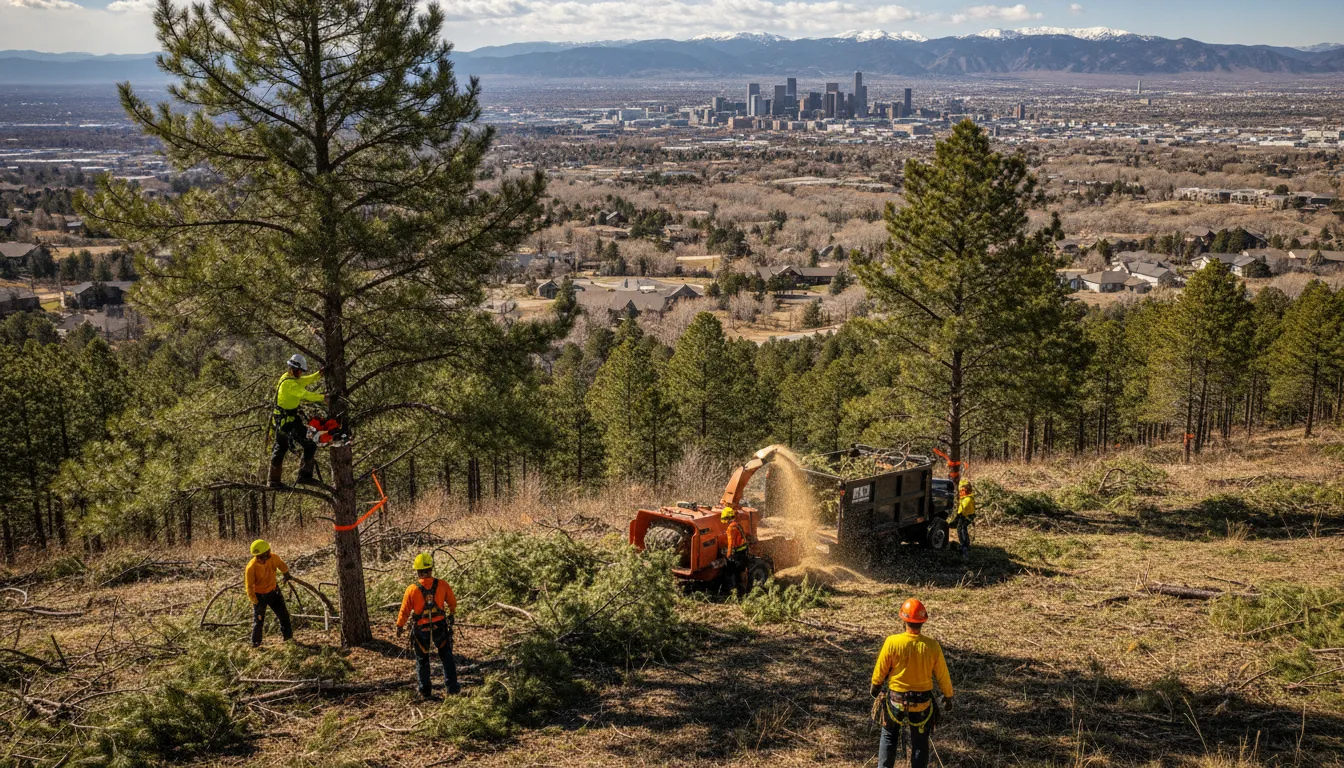
Tree care on the Front Range can include planning for wildfire risk and choosing plants suited to local conditions. An arborist can discuss fire mitigation around your property, taking into account trees, other vegetation, nearby structures, and the site itself. They can also help you think through native tree options, where to plant, and what conditions a new tree will need to grow well.
If a tree must be removed, ask whether replacement planting makes sense and which species could suit the space. Consider sunlight, available water, soil, and the tree’s mature size before choosing a location. A thoughtful choice can help maintain shade and landscape value as the new tree grows. Natural Tree Care and Recycling offers fire mitigation and native tree planting services for property owners planning both immediate care and future growth.
Protect tree health and responsibly handle removed material
Good tree care considers the work itself as well as what happens afterward. Before pruning or removal begins, ask how the crew will protect the tree, people, and nearby property. If removal is recommended, confirm what the estimate includes, such as stump work, cleanup, and handling of branches and wood.
Ask whether removed material can be reused or recycled rather than discarded. Natural Tree Care and Recycling emphasizes recycling debris from tree removals and helping clients consider replacement trees. The crew can explain how it plans to handle the material and whether any parts can be put to another use. ISA Certified Arborists also agree to follow the ISA Code of Ethics, which sets expectations for professional conduct.
Who Qualifies for ISA Certified Arborist Certification?
Qualify through education, experience, or both
You may qualify for the ISA Certified Arborist exam through professional experience, relevant education, or a combination of the two. One pathway requires at least three years of full-time experience in arboriculture. If you have a two-year degree in a related field, you may qualify with at least two arboriculture courses and two years of practical experience. A four-year bachelor’s degree in a related field may qualify you with one year of practical experience.
These pathways recognize that people build arboriculture knowledge in different ways. Before applying, compare your background with the ISA’s Certified Arborist eligibility requirements. Check that your experience and education meet the details for a specific pathway, rather than assuming that a related job title or degree automatically qualifies you.
Document qualifications and apply to ISA
Be ready to document your work history and education. The application may ask about employers, job duties, and practical tasks related to arboriculture. If you’re applying based on a degree or coursework, gather records that support those qualifications, too. Having the details on hand can help you complete the application accurately.
ISA must approve your application before you can register for the exam. Review the application guidance to understand what information to provide and how to submit it. If you’re unsure whether a particular job duty counts as relevant experience, clarify that before applying. Careful preparation can help you avoid delays and make it easier for ISA to assess your qualifications.
Check ISA’s current eligibility rules
Certification requirements and application procedures can change. Use ISA’s current materials as your final reference, and confirm that your education, courses, and work experience match the pathway you plan to follow. If your qualifications don’t fit neatly into one category, contact ISA before submitting your application.
Initial eligibility is also separate from maintaining certification. After earning the credential, arborists must meet ISA’s recertification requirements. ISA lists two options: pass the certification exam again or earn at least 30 continuing education units during the three-year certification period. Check the current ISA application and certification information for the latest requirements and instructions.
What Should You Expect on the ISA Certified Arborist Exam?
The ISA Certified Arborist exam covers practical knowledge used in professional tree care. Understanding the reported format and the main subject areas can help you prepare, but exam details may change. Check the current ISA materials before you apply and again before test day.
Know the reported format: 200 multiple-choice questions in 3.5 hours
The exam is commonly reported as 200 multiple-choice questions, with 3.5 hours to complete them. That works out to about one minute per question, so pacing matters. Practise reading each question carefully, choosing the best answer, and moving on if you get stuck. If the testing format allows you to return to questions, you can review the ones you marked later.
Use these figures as a guide, not a substitute for current instructions. Confirm the format, scheduling options, and testing procedures through Pearson VUE’s ISA exam information. A timed practice session can help you get used to answering questions at a steady pace.
Study tree biology, pruning, diagnosis, and safety
The exam is reported to cover 10 subject areas, including tree biology, pruning, diagnosis, and safe work practices. Prepare across the full range of arboriculture, even if some topics come up more often in your day-to-day work. Review how trees grow and respond to injury, how pruning affects structure and health, and how to recognize signs of pests, disease, and environmental stress.
Safety is another essential area to review. Make sure you understand common job-site hazards and the practices that help reduce risk during tree work. A video guide to the reported exam format and topics can help you identify subjects to revisit. Check ISA’s current materials to confirm the exam content.
Check ISA’s current candidate handbook for exam details and scoring
Before you apply, read the current candidate handbook for the credential you want. It outlines eligibility, application steps, exam policies, and scoring details. ISA reviews applications, and the process may take more than one review round. Allow enough time for that review and respond promptly if ISA requests more information.
The handbook is also the best place to confirm details that may change, including testing procedures and what to expect on exam day. Start with Pearson VUE’s ISA exam page and follow its links to the current candidate materials. Older study guides and third-party summaries can be useful for background, but they may not reflect the latest requirements.
Use ISA study resources to plan your preparation
Once you’ve reviewed the requirements, make a study plan based on the subjects you need to strengthen. Divide the material into manageable sessions, set a regular study schedule, and use practice questions to identify gaps. Spend more time on topics that feel less familiar, but revisit the subjects you know well too.
Use ISA’s preparation materials alongside the current candidate handbook so your study plan reflects the exam guidance. Pearson VUE’s ISA exam page links to a demo test and other candidate information that can help you prepare for the testing process. Before using a course, book, or online practice tool, check that it aligns with current exam materials.
How Do You Maintain ISA Certification?
Passing the exam is only one part of becoming an ISA Certified Arborist. Arborists must renew their credential, follow ISA’s professional standards, and continue learning about tree care. These requirements help keep their knowledge current as research and industry practices develop.
Earn 30 continuing education units every three years or retake the exam
ISA offers two ways to recertify as an ISA Certified Arborist: earn at least 30 continuing education units (CEUs) during each three-year certification period, or retake and pass the certification exam. The CEUs must relate to the exam’s subject areas. Arborists also need to pay the recertification fee.
It helps to track completed courses and activities throughout the certification period rather than waiting until renewal is close. Accepted activities, fees, and other requirements can change, so arborists should check ISA’s current certification application before applying to recertify.
Meet credential requirements and follow the ISA Code of Ethics
Keeping the credential requires more than completing continuing education. ISA credential holders must continue to meet the requirements for their certification and follow the ISA Code of Ethics. The code sets expectations for professional conduct and supports the credibility of the credential.
For property owners, an arborist’s ethical obligations are one helpful part of evaluating their qualifications. Ask about their experience with your tree and the work you’re considering, and make sure their recommendations address your goals and site conditions. ISA’s Certified Arborist information explains the credential’s requirements and ethical standards.
Keep your tree care knowledge current through continuing education
Continuing education helps arborists build on what they learned while preparing for the certification exam. Eligible courses, workshops, and other activities can cover topics such as tree biology, pruning, diagnosis, and safety. ISA describes continuing education as a way for credential holders to improve their technical skills and stay engaged with their profession.
For Front Range property owners, current knowledge can inform decisions about local tree care needs, from managing pests to responding to drought stress or storm damage. CEUs are not just a renewal requirement; they give arborists a regular reason to keep learning. Read ISA’s guidance on continuing education for credential holders to learn more about eligible activities and requirements.
What Are Common ISA Arborist Misconceptions?
An ISA Certified Arborist credential can be a helpful sign of arboriculture knowledge, but it doesn’t tell you everything about a tree care provider. Understanding what certification does and doesn’t mean can help you compare recommendations and ask useful questions before work begins.
Certification isn’t a business license or a quality guarantee
ISA certification is a professional credential, not a business license or a guarantee of the quality of every job. It indicates that an individual has met the program’s requirements and passed an exam. The credential alone can’t confirm that a provider’s recommendations suit your tree, property, and goals.
Use certification as one point of reference, then look at the company’s work practices. Ask for proof of insurance, a written estimate, and a clear explanation of the proposed work. A good assessment should consider the tree’s health, its surroundings, and your concerns, rather than jump straight to removal or another major service. You can also review the ISA’s Code of Ethics to understand the professional standards certified arborists are expected to follow.
A credential doesn’t guarantee a specialty or level of field experience
The ISA Certified Arborist credential covers broad arboriculture knowledge, but it doesn’t certify someone for every specialty or prove how much hands-on experience they have with a particular task. A provider’s background in diagnosis, pruning, climbing, removals, or fire mitigation can vary. The ISA credential overview explains the certification program, but a conversation with the provider can help you understand how their experience fits your project.
Ask who will assess the tree and who will perform the work. If you’re concerned about pests, ask about experience identifying and managing that issue. For a removal near a home or other structure, ask how the crew will protect your property and carry out the work safely. Specific, clear answers can help you judge whether the provider is prepared for the job.
Skilled tree care professionals may not hold ISA certification
Certification is one way to demonstrate arboriculture knowledge and a commitment to professional standards, but it isn’t the only measure of a tree care professional’s abilities. Experienced practitioners may not hold an ISA credential, and not every crew member performing tree work will necessarily be certified. Consider each provider’s training, relevant experience, references, insurance, and the reasoning behind their recommendations.
Ask providers to explain the options for your tree, including the potential benefits and drawbacks of pruning or removal. A qualified professional should be able to describe how the proposed work may affect the tree and answer your questions in plain language. If you’re comparing tree care services in the Denver area, ask how the work will support tree health and how the team will handle or recycle debris.
What Are the Benefits of Hiring an ISA Certified Arborist?
An ISA Certified Arborist can help you understand your tree’s condition and weigh practical care options. Certification reflects professional knowledge, but it’s still wise to ask about relevant experience, the proposed work, and how the crew will protect your property.
Get recommendations informed by arboriculture knowledge
Tree problems aren’t always easy to spot. An arborist can assess a tree’s health, structure, and surroundings, then explain what they observe and why they recommend a particular approach. Their training covers areas such as tree biology, diagnosis, maintenance, and safety.
Ask what signs they noticed, how urgent the issue is, and whether there are alternatives to the proposed work. A good recommendation should account for the tree and its location, rather than applying the same solution to every situation. The ISA Michigan overview describes the professional knowledge associated with certification. Consider that credential alongside the arborist’s field experience and the clarity of their written plan.
Discuss pruning, pest management, removal, and planting options
An arborist can explain which care options fit your tree’s condition and setting. Recommendations may include pruning dead or damaged branches, addressing pests or disease, supporting a limb, or removing a tree that can’t be retained safely. If you’re adding or replacing a tree, ask about species and planting conditions that suit your site.
Ask the arborist to explain the benefits and limits of each option. Pruning may address a specific concern, for example, but it won’t necessarily resolve an underlying health problem. The North Carolina Cooperative Extension’s overview describes common recommendations an arborist may make after assessing a tree. A thorough discussion should also cover whether monitoring or a less intensive approach could work.
Make decisions with tree health, property safety, and long-term care in mind
Tree work can affect the tree, nearby buildings, and people who use the space. An arborist can explain potential concerns, how soon work may be needed, and how different choices could affect the tree over time. That context can be especially helpful after storm damage or when branches are close to a home, driveway, or walkway.
Ask how the proposed work addresses your concerns and what results you can reasonably expect. Certification can help you identify someone with recognized tree-care knowledge, but it doesn’t guarantee the quality or outcome of a job. The ISA Michigan credential overview explains how certification can support informed decisions about tree-care services. A clear plan can help you balance safety needs with preserving a healthy tree when possible.
Ask how the work supports sustainable care for Front Range trees
Sustainable care starts with choosing an approach that fits the tree and the site. That might mean preserving a tree with targeted care, planting a suitable replacement, or finding a responsible use for wood and branches after removal. For Front Range properties, discuss how the recommendation fits local conditions and your long-term landscape plans.
Ask what will happen to the debris and whether replacement planting makes sense if a tree must come down. Natural Tree Care and Recycling provides tree care, removal, and planting services, with an emphasis on tree health and recycling tree debris. You can also ask how the arborist’s recommendations reflect professional ethics. The ISA Code of Ethics outlines the standards ISA Certified Arborists agree to follow.
How Do You Find and Verify an ISA Arborist?
Start by confirming the arborist’s certification, then ask about experience with your tree and the work you need. For Denver-area properties, it’s also helpful to discuss local growing conditions, pests, and fire concerns.
Search the TreesAreGood directory and verify current credentials with ISA
Use the TreesAreGood arborist directory to find professionals in your area. Ask any arborist you’re considering for their ISA credential details, then verify that the certification is current through ISA. A directory search is a helpful first step, but it doesn’t tell you whether someone has experience with your particular tree or concern.
Ask about work similar to yours, whether you need a health assessment, pruning, pest management, or advice after storm damage. You can also review a company’s tree services and ask who will assess the work and supervise the crew.
Ask about relevant experience, insurance, and work scope
Ask how much experience the arborist has with the type of tree and work involved. Find out who will assess your tree, who will oversee the crew, and what the crew plans to do. A clear explanation helps you understand whether the recommendation addresses your concern and what to expect on the day of the work.
Before hiring, request proof of liability and workers’ compensation insurance. You can also ask for references from clients with similar projects. The North Carolina Cooperative Extension’s guidance on hiring an arborist recommends checking qualifications, insurance, and references, and comparing multiple estimates. Ask the arborist to explain any proposed work in plain language.
Request a written estimate and compare the recommendations
Ask for a written estimate that identifies the trees and work included, along with cleanup details and any limits on the work. Read it carefully, and ask about access, equipment, and how the crew will protect nearby landscaping. If removal is recommended, ask whether pruning or another approach could address the concern, and how the wood and debris will be handled.
When comparing estimates, look at the recommendations and scope, not only the price. Ask each arborist to explain why they recommend that approach and how it fits your tree and property. The TreesAreGood brochure on hiring an arborist advises reviewing written estimates and comparing options. A detailed estimate makes it easier to understand what you’re agreeing to before work begins.
What Should You Ask Before Tree Work Begins?
Before the crew arrives, make sure you understand the proposed work, how the team will protect your property, and what will happen to the debris. Ask for the agreed scope and cleanup details in writing so you and the arborist share the same expectations.
Clarify the work plan, safety practices, and property protections
Ask the arborist to explain the recommended work and why it suits your tree. If the plan includes pruning, find out which branches will be cut and what the work is intended to address. If removal is recommended, ask what alternatives were considered.
You can also ask who will be on site, how the crew will manage safety risks, and how they’ll protect nearby structures, fences, gardens, and lawn areas. Confirm where equipment will go and whether you need to clear access to the work area. The ISA’s guide to hiring an arborists advises clients to review the contract carefully and ask questions. Make sure the written scope includes the work, cleanup, and any agreed property protections.
Ask how the crew will handle debris and whether they can replace removed trees
Cleanup can mean different things, so ask what’s included. Will branches and logs be hauled away, chipped on site, or left for you to use? If stump grinding is part of the job, confirm how deep the crew will grind, what will happen to the wood chips, and whether filling the area is included.
If a tree needs to be removed, ask whether planting a replacement is a good option for your property. The right choice depends on available space, sunlight, soil, water, and the tree’s expected mature size. Natural Tree Care and Recycling offers tree services that include native tree planting, and recycles debris from removals. Discuss what you’d like to keep, recycle, or have hauled away before work begins.
Confirm recommendations fit your tree, site, and goals
Ask the arborist to explain how each recommendation relates to your tree and property. For concerns such as pests, disease, storm damage, or fire risk, ask what signs they observed and what options are available. It’s also helpful to understand what may happen if you delay the work and how the proposed care could affect the tree over time.
Share your priorities, too. You may want to preserve shade, improve clearance, reduce a safety concern, or make room for planting. Ask how the work supports those goals and whether there are other approaches to consider. ISA Certified Arborists agree to follow the ISA Code of Ethics, but the plan should still be tailored to your site. A good discussion gives you a clear picture of the reasoning, options, and next steps.
Frequently Asked Questions
How can I check whether an arborist’s ISA certification is current? Ask for the arborist’s name or credential details and verify them through ISA or the TreesAreGood directory. A listing is a useful check, but you should also ask about experience with your tree and the work you’re considering.
Does ISA certification mean a tree care company is licensed and insured? No. Certification belongs to an individual and is separate from business licensing and insurance. Ask the company which local requirements apply to your project, and request proof of liability and workers’ compensation coverage before work begins.
Does an ISA Certified Arborist always recommend removing a damaged tree? Not necessarily. The recommendation depends on the tree’s condition, location, and the risks involved. Ask whether pruning, support, monitoring, or another option could address the concern, and what the trade-offs would be.
Does every person on a tree care crew need to be ISA certified? No, the credential applies to individuals, and crew members may have different training and roles. Ask who will assess the tree, who will supervise the work, and what experience the crew has with your type of project.
How does an arborist maintain ISA certification? Credential holders renew on a three-year cycle. They can meet ISA’s recertification requirements through continuing education or by retaking the exam. Check ISA’s current guidance for the latest renewal rules.