Poplar Tree Guide: Types, Identification and Care
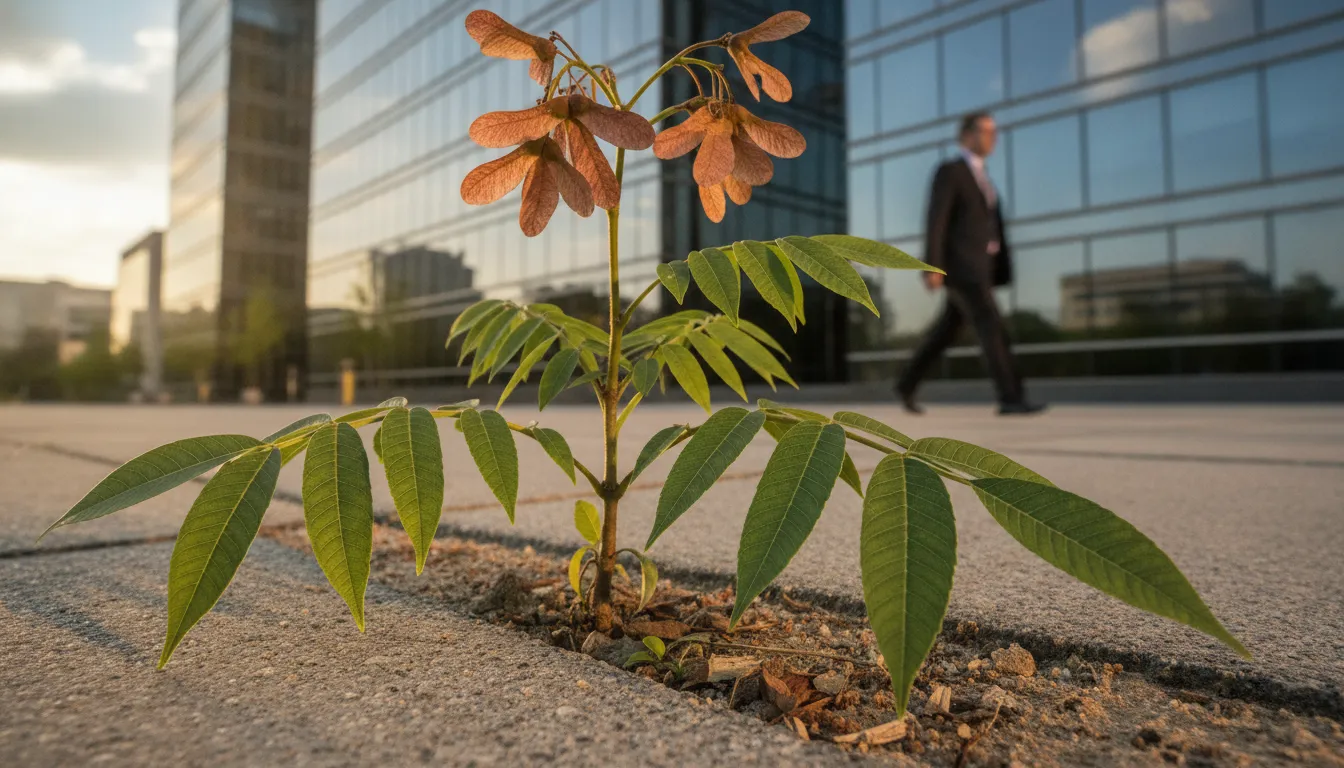
A pale trunk, a leaf that trembles, or a driveway full of cotton in June all raise the same question: is that a poplar tree? Poplars are the trees in the genus Populus, and the group includes cottonwoods and aspens. They do not all behave the same. Some want a riverbank. Some are planted as a narrow screen and then break in a Front Range wind.
Knowing which one you have decides whether you water it, prune it, or think about taking it out.
Request a free estimate if you want an arborist to identify the tree and tell you what it needs.
Which poplar tree is it?
Use more than one feature. A single leaf shape is not enough, because these trees vary and they hybridize.
- Plains cottonwood.
Broad triangular leaves, a huge crown, and bark that furrows deep and dark with age. Common along ditches and rivers. It needs real room and real water.
- Narrowleaf cottonwood.
Long, slender leaves and a more upright crown. A Colorado native of streams and foothill valleys, not a dry parking island.
- Quaking aspen.
Smooth pale bark and small round leaves on flat stalks that flutter. It forms clumps from the roots. Better in cooler, moister spots than on a hot south-facing Denver lot.
- Lombardy poplar.
A tight column, planted as a screen. Fast, brittle, and often short-lived in wind and dry soil. A row along a fence is a common regret.
If you are choosing a tree rather than identifying one, match the mature size to the yard. A cottonwood that looks charming at six feet is a foundation and a sewer problem at sixty. Tree services can cover identification, pruning, and, when it is the right call, removal.
What they need, and what goes wrong
Most poplars want full sun, moist but draining soil, and space for roots that run wide and shallow. On the Front Range that means irrigation for anything that is not sitting on a ditch or a high water table. A dry spell is when large poplars drop limbs and when new plantings stall. Water deeply and less often, out at the drip line, and keep mulch off the trunk.
The drawbacks are the reason people call:
- Roots and suckers.
Roots can interfere with pipes, walks, and foundations. Some species send up suckers across a bed or a lawn. Cutting the suckers does not stop the roots.
- Cotton and litter.
Female cottonwoods release seed cotton. All of them drop catkins and a heavy leaf crop. That is a cleanup issue, not a disease.
- Brittle wood.
Fast growth means weak attachments. Wind, snow, and an old topping cut all show up as broken limbs. Do not top a poplar to make it smaller. The sprouts that follow are weaker than the wood you cut.
- Pests, decay, and a shorter life.
Cottonwoods in particular can be large and hollow sooner than people expect. A short life compared with an oak is normal, not a failure of care.
They also do useful work in the right place. Along a waterway, a native cottonwood shades the bank and feeds wildlife. In a yard with room and water, a cottonwood is serious shade. The mistake is planting that tree in a courtyard.
Care that actually helps
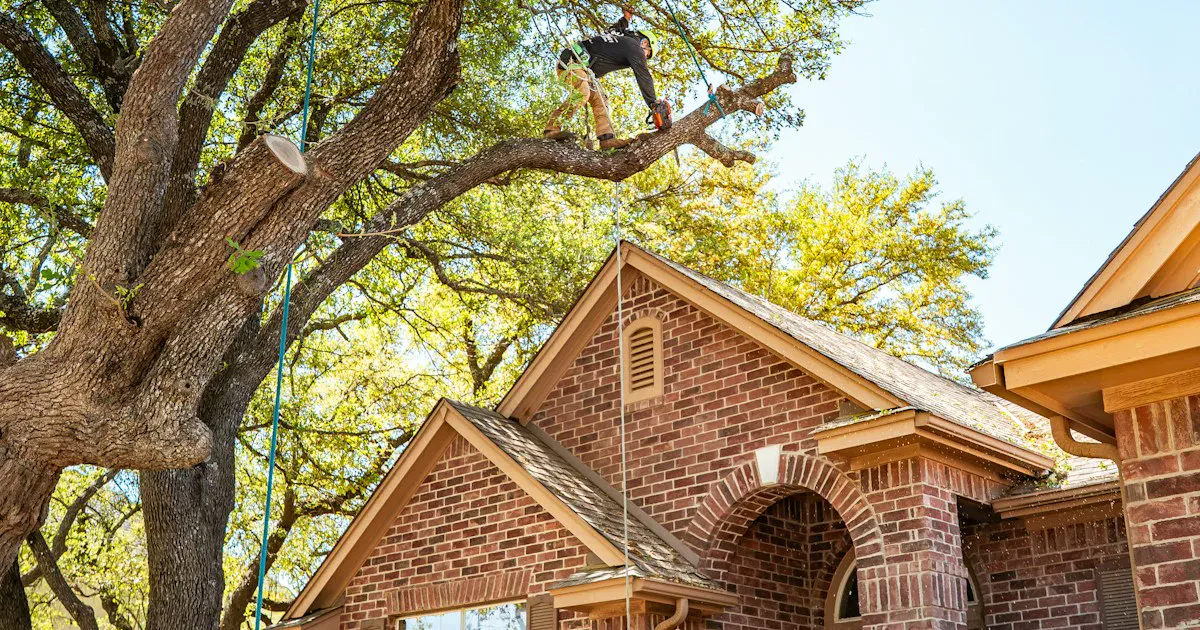
Plant a species that fits the spot, not the one that was on sale. Set the root flare at soil level, water it through the first seasons, and mulch without touching the bark. Prune young trees for a single sound structure, and take dead, cracked, or rubbing wood out of older ones. Large deadwood over a roof or a walk is a reason to call, not a reason to climb.
If the tree is hollow, heaving a walk, or dropping large limbs, get an assessment before you spend years pruning a tree that should come out. Removal does not include stump grinding, and a replacement tree is optional. If you replant, choose something whose mature size matches the space. A new cottonwood in the same hole repeats the problem. No one can promise a stressed poplar can be saved. Condition, water, and weather decide that.
For a closer look at one relative people confuse with a generic "poplar," see how to identify and care for aspens.
What to do this season
If the tree is staying, water it. A large cottonwood on a dry Front Range lot is living on irrigation, not on rainfall. Soak the root zone in a long dry spell, out toward the drip line, and do not aim a sprinkler at the trunk every day. Keep mulch a few inches off the bark. Clear suckers at the base if you can do it from the ground, and know they will be back if the roots are stressed or if the tree is a species that suckers freely.
Prune for safety, not for a smaller silhouette. Take dead and cracked wood, especially over the roof, the walk, and the drive. Leave the big reductions to someone who can land a cut on a real side branch. A topped poplar looks shorter for one summer and then grows a broom of weak shoots that break in the next wind. If the trunk is hollow, the lean is new, or roots are lifting the foundation, ask for an assessment before you invest in pruning.
If the tree comes out, decide on the stump and on a replacement separately. Do not put another cottonwood in a courtyard. Choose a tree whose mature size fits the bed, the water you can give, and the distance to the house. Survival of whatever you keep or plant depends on the species, the care, and the weather. It is not something anyone can promise.
Use the same caution with "poplar" sold as a bargain screen. Ask for the species name, the expected height and width, and whether it suckers. A columnar poplar six feet from a fence looks like an answer for one season. Five years later the roots are in the bed and the tops are snapping in a chinook wind. If you already have that row, you do not have to remove every trunk this year. Start with the ones that are dead, cracked, or leaning over a target, and decide the rest after you see how the yard looks. Replacing them is optional, and it should be a tree you can water.
FAQ
Is an aspen a poplar?
Yes, in the broad sense. Aspens are in the same genus as cottonwoods. Care and site are not identical, so identify the tree before you water or prune on a cottonwood schedule.
Why is my poplar dropping branches?
Dry soil, brittle structure, old storm damage, and previous topping are the usual reasons. A sudden increase in dropped limbs is worth an on-site look, especially if the limbs are large.
Can I plant a Lombardy poplar as a privacy screen?
You can, and many people wish they had not. The screen is fast, then the trees break, sucker, or die in sections. A slower tree, or a fence with a tougher shrub, is often a better fit for a dry, windy lot.
Name the tree, then decide
A poplar in the right place is a asset. The same tree hard against a foundation is a project. Identify it, give it water if you are keeping it, and do not top it to buy time.
Call 303-803-3850 or request a free estimate. Phones are answered Mountain Time, Monday through Friday, 8:00 a.m. to 4:30 p.m.