Tree of Heaven: How to Identify and Control It
Tree of heaven (Ailanthus altissima) is a fast, weedy tree in Denver alleys, fence lines, and disturbed soil. It was planted on purpose a long time ago. It spreads on its own now, by seed and by shoots from the roots. Cutting it down and walking away usually makes more of it.
If you think you have one in Denver, confirm it before you cut. Smooth sumac and ash have a similar compound leaf. They are not the same problem.
Request a free estimate if you want the tree identified before anyone cuts it.
How to tell tree of heaven from the lookalikes
Leaves.
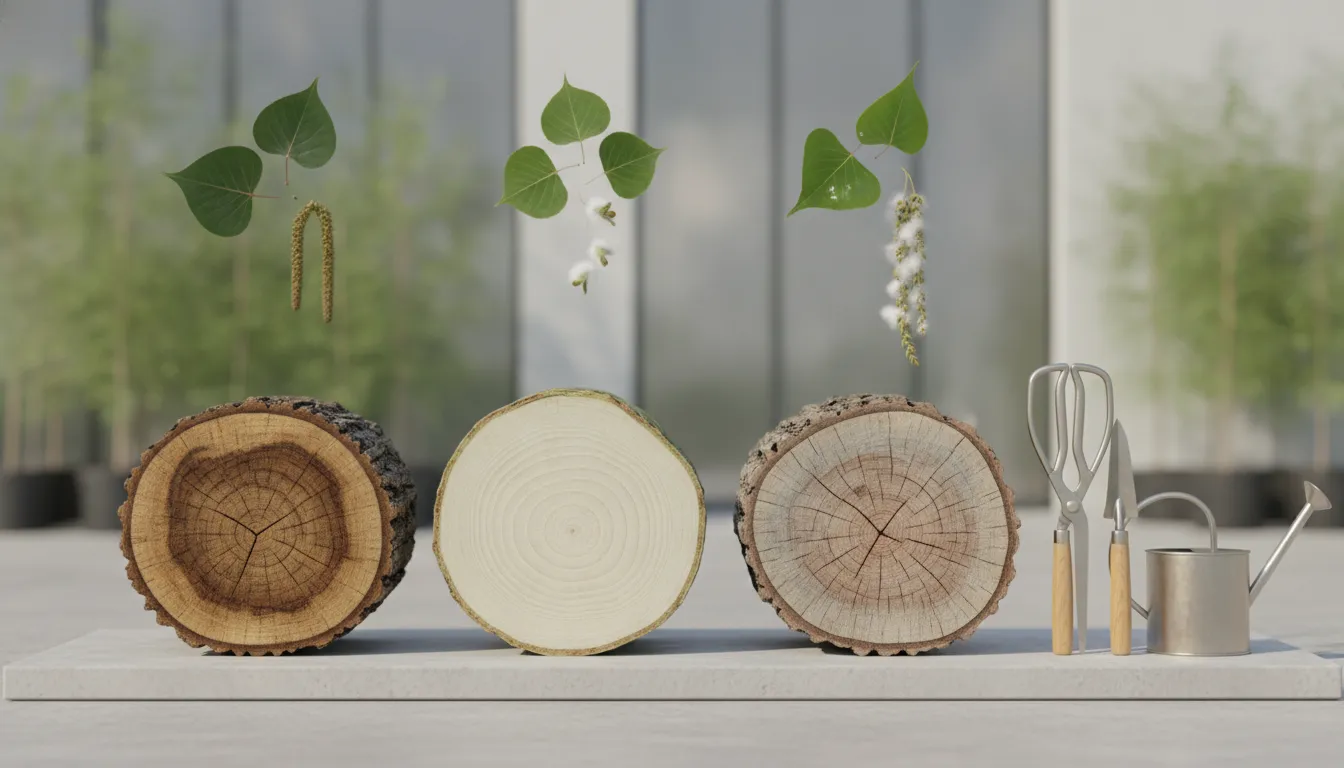
Very long compound leaves. The leaflets are smooth-edged except for one or two small glandular notches at the base. That notch is the useful tell. Crush a leaflet and the smell is sharp, like rancid peanut butter. Colorado Master Gardeners use that gland-tipped pair, plus the bad smell, in their
tree of heaven identification notes
.
- Twigs and bark.
Twigs are stout, with a brown pith. Bark on older trunks is gray and fairly smooth, like cantaloupe skin, before it roughens.
- Seeds.
Clusters of flat, twisted, papery wings, often reddish, hang on the tree and blow. A mature female tree makes a lot of them. Jefferson County's weed sheet puts that at up to about 300,000 seeds on one tree.
Smooth sumac
has toothed leaflets and a denser, shrubbier habit, often with fuzzy twigs.
Ash
has opposite leaves and single winged seeds, not long clusters of twisted wings. Check opposite versus alternate twice. Tree of heaven leaves are alternate.
A photo of one leaflet is not enough if you are about to use herbicide or take the tree down. An arborist visit can confirm it and separate it from a tree you meant to keep.
Trait | Tree of heaven | Smooth sumac | Ash |
Leaflet edge | Smooth, with one or two notches at the base. | Toothed. | Usually toothed. |
Leaf arrangement | Alternate. | Alternate. | Opposite. |
Seeds | Long clusters of twisted wings. | Upright red clusters. | Single winged seeds. |
Crushed leaf | Sharp, unpleasant smell. | No peanut-butter smell. | No peanut-butter smell. |
Why tree of heaven is a Denver problem
Tree of heaven is on Colorado's noxious weed list as a List C species. The state recommends control. It does not require every county to enforce removal. That gap is why Denver neighbors have organized on their own.
Denver Tree of Heaven is a resident group working on this tree in the city. It tracks sightings, teaches identification, and helps in neighborhoods where a captain is active. The group describes roots running under patios and toward foundations, including in Skyland, and shoots coming up in tiny gaps. A Denver County Master Gardener answering a local crawl-space question pointed owners to the state noxious-weed guidance and said control takes persistence when neighboring yards keep seeding the block. Read that exchange on Ask Extension.
In Denver it shows up in alleys, parking-lot edges, and older neighborhoods. It tolerates heat, drought, compacted soil, and pollution, so a seedling can come up in a sidewalk crack. The wood is weak and breaks. Roots can heave pavement and get into foundations and sewer lines. The federal invasive-species profile of tree of heaven describes the same fast spread from seed and root sprouts.
It is also the preferred egg-laying host of the spotted lanternfly. Colorado State University Extension says that insect had not been found in Colorado as of June 2025. Treat that as a reason to stay current, not as a pest on your block today. If you see a tree, log it in EDDMapS so the state can see where it actually is.
Seed blows off a mature female tree and lands in the next lot. Roots cross a property line and send shoots into a lawn or a crawl space. Treating only the trunk in your yard, and ignoring the tree next door, means the same job next summer. Talk to the neighbor before you cut a shared line. Do not assume a city crew will remove a tree on private property.
Why cutting it often fails
Tree of heaven sets huge numbers of wind-blown seed, and it also spreads from the roots. Denver Tree of Heaven says those roots can run 50 feet or more from the trunk. Cut the trunk, and the stump and the roots commonly throw up a thicket of suckers. Digging a large tree and leaving root pieces does the same thing. Disturbed ground, which construction and cleanup create, is where it establishes.
Jefferson County says stumps will resprout. Cutting works only when you also treat the cut surface and the new shoots. Its sheet lists the tree as Colorado List C, control recommended, and puts a mature tree at about 80 feet with up to about 300,000 seeds. Denver Tree of Heaven says young sprouts can add 10 to 15 feet in a year. Where the tree takes over, it crowds out other plants and can thin the mix of trees a Denver yard actually wants for shade.
What actually works
Small seedlings, with roots that still pull cleanly, can be pulled when the soil is moist. Get the root. Do not leave a fragment.
For an established tree, cutting alone is the approach most likely to backfire. Effective control usually means treating the living tissue so the roots die, then watching the site. Denver Tree of Heaven, following Colorado woody-plant guidance, points to triclopyr products labeled for this use. Use hack-and-squirt on larger trunks. Use a basal-bark treatment on smaller stems. Use a foliar spray only on small plants you can cover without soaking a garden. The label is the instruction: rate, timing, and where you may apply it.
Confirm the tree by the notched leaflet, the smell, and the seed clusters.
Pull only seedlings whose whole root comes out of moist soil.
Treat established stems in late July through October, while sugars are moving to the roots.
If you cut, treat the fresh stump within about a minute. Do not wait until next weekend.
Leave a large treated tree standing so the treatment can reach the roots. Then check for shoots for at least a year.
A spring cut, with no follow-up, is how people get a thicker patch by August. Seed in the soil and a neighbor's tree will keep the problem alive if you stop at one visit. Bag seed clusters. Ask your local disposal program before you haul a load full of seed. Natural Tree Care recycles wood from its own jobs. That is not an invitation to drop off a trailer of tree of heaven debris.
When to call, and what comes next
Call when the tree is large enough to hit a house, a line, or a fence. Call when you already cut it and it came back, or when you are not sure it is tree of heaven. A large specimen is a removal, with the control step included, not a pruning job. Stump grinding without dealing with the roots and the shoots will not finish it. Grinding is its own line on a quote. Read Jefferson County's tree of heaven sheet for the local weed facts, then get a plan for your yard.
If you replant, wait until the shoots have stopped for a season, and choose a tree whose mature size fits a Denver yard. Planting is optional and is not part of the removal. No one can promise a single treatment erases every root. You should expect follow-up. Mark the stump and walk a wide circle around it the next May, then again in late summer. Pull new seedlings while they are small, and treat suckers from an old root the same way you treated the original tree.
Skip the homemade shortcuts. Salt, motor oil, and girdling without a follow-up plan damage the soil and still leave a living root. If you are not comfortable using an herbicide, say so. The alternative is cutting every shoot for years, until the roots starve, and that works only if you keep up. Identify the tree first, so you are not treating a sumac or an ash you wanted. Large trees near a roof or a line should be dismantled by a crew.
Call 303-803-3850 or request a free estimate. Phones are answered Mountain Time, Monday through Friday, 8:00 a.m. to 4:30 p.m.