Rowan Tree Guide: Identification, Care, and Berry Safety
A rowan is a small deciduous tree with compound leaves, flat clusters of white flowers in spring, and orange-red berries by late summer. People also call it mountain ash. It is not a true ash, and it has nothing to do with emerald ash borer. The leaves look a little like ash at a glance, which is where the confusion starts.
On the Front Range, the question is usually whether a rowan already in the yard is the right tree to keep, or whether someone should plant one. Identification comes first. Suitability second.
Request a free estimate if you want help identifying the tree or deciding whether it belongs.
How to recognize a rowan
Look at several features together, not one leaf.
Leaves.
Alternate, compound leaves with many toothed leaflets. European mountain ash (
Sorbus aucuparia
) is the one most often planted. The leaflets are paired along a central stalk, with a leaflet at the tip.
- Flowers and fruit.
Creamy white flower clusters in spring, then berries that ripen orange to red. Birds, especially thrushes and waxwings, eat the fruit and spread the seed.
- Bark and size.
Smooth gray-brown bark on younger trees, a modest mature height compared with a shade tree. This is a yard tree, not a cottonwood.
- Not a true ash.
Ashes have opposite leaves and winged seeds, not berry clusters. If you are worried about emerald ash borer, confirm you do not actually have an ash before you plan treatment. Treatment is for ash, after an inspection, and it is not organic or pesticide-free.
American mountain ash and a few other Sorbus species share the look. If you need the species nailed down for planting or for a pest question, an on-site look beats a photo. Tree services can include that identification.
Will it grow here?
Rowans prefer cool summers, sun or light shade, and soil that drains but does not bake dry. Much of the Denver metro is hotter, drier, and windier than the tree's best range. A rowan can grow here with water and a spot that is not a south-facing brick wall, and it can also stall, sunburn, or look thin. Higher, cooler sites toward the foothills are a kinder match than a hot parking edge in Aurora.
If you are planting, check mature size against the walk, the eaves, and the lines. Set the root flare at soil level, water it through establishment, and mulch without piling it on the trunk. Call 811 before you dig. Do not assume a rowan from a coastal or northern nursery sheet will behave the same on the Front Range. A locally proven small tree may be the better choice. Planting is its own decision, not something included with removing a different tree.
Berries, wildlife, and care
The flowers feed insects, and the berries feed birds. That is the main wildlife value in a yard. People traditionally cook rowan berries into jelly. Raw berries can upset a stomach. This is not a foraging guide: identify the tree with certainty, use a trusted cooked recipe if you use the fruit at all, and keep raw berries from children and pets. If someone may have eaten an unknown berry, contact Poison Control rather than guessing.
Care is ordinary and light. Water deeply while the tree establishes and during Front Range dry spells. Prune out dead, damaged, or rubbing wood. Do not top it. Watch for borers, fire blight symptoms, or a thinning crown, and get those identified before you spray anything. A rowan that is the wrong tree for a hot site will not become the right tree through products.
Folklore about rowan as a protective wood is history, not a care practice, and old medicinal claims are not a reason to use any part of the tree as medicine.
Planting and the first two years
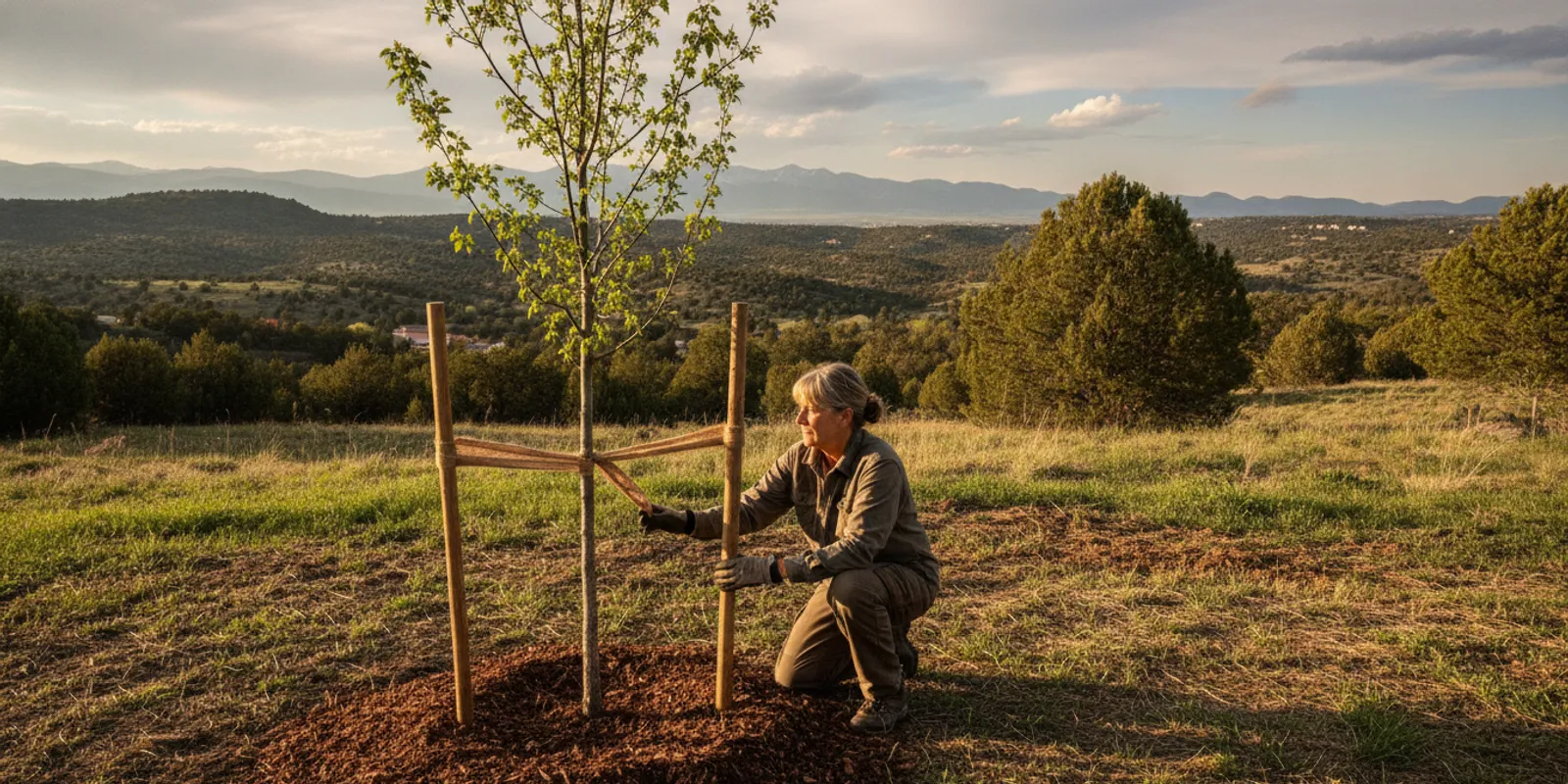
If you plant one, pick the spot for July, not for the tag in the nursery. Morning sun with some afternoon relief beats a west wall. Dig wide, set the root flare at grade, and water it in. Mulch, and keep the mulch off the bark. Stake only if the root ball cannot hold the tree up, and remove the stake the next season so the trunk can move and strengthen.
Through the first two summers, check the soil with your hand. Water deeply when it is dry a few inches down. A rowan that wilts every hot week is telling you the site is harsh. You can sometimes nurse it, and you can also replace it with a tougher small tree before you have spent five years on it. Prune only broken or rubbing twigs at first. Shape can wait.
If an existing rowan is thin, scorched on the south side, or pushing weak growth, do not assume a product will fix the climate. Confirm it is not actually an ash before anyone talks about borer treatment. Ash treatment is a specific program, decided after an inspection, and it is not a general tonic. And if the tree is simply the wrong one for the yard, removal, stump grinding, and a different replacement are three separate choices.
One more mix-up is worth avoiding. Serviceberry, some crabapples, and young ashes get called mountain ash by neighbors. Berries plus alternate compound leaves plus the modest size are the rowan combination. If the leaves are opposite, stop and treat it as an ash question instead. And if you cook the fruit, use a known recipe and a tree you have identified carefully. A blog post is not a foraging manual, and it is not medical advice. When a child or a pet eats an unknown berry, call Poison Control. For the tree itself, pruning, removal, and any new planting stay separate jobs with their own lines on a quote.
Water and mulch will not turn a struggling rowan into a shade tree, and they should not be asked to. Enjoy it for the flowers and the birds if the site is kind enough. If it is not, replace it sooner rather than later with something that fits, and treat that planting as its own small project: the right season, flare at grade, and a hose you will actually use.
Common questions
Is mountain ash the same as ash?
No. Mountain ash is a common name for rowan. True ashes are a different group, and they are the trees emerald ash borer attacks. The leaf arrangement is the quickest tell: ash leaves are opposite, rowan leaves are alternate.
Are the berries safe?
Birds eat them. People traditionally cook them. Raw fruit can upset your stomach, and a misidentified tree is not worth the experiment. Keep raw berries away from children and pets.
Should I plant one in Denver?
Only if you can give it water and a less brutal spot, and you like it knowing it may struggle in hot summers. If you want a tough small tree with less fuss, ask for options that are already doing well in nearby yards.
Identify it, then decide if it stays
A rowan is a small flowering tree with red berries, not an ash and not a shade tree. If the one you have is thriving, leave it and prune only what is dead or broken. If you are about to plant one into a hot, dry spot, pause.
Call 303-803-3850 or request a free estimate. Phones are answered Mountain Time, Monday through Friday, 8:00 a.m. to 4:30 p.m.