Winter Tree Care Colorado: A Practical Property-Owner Guide
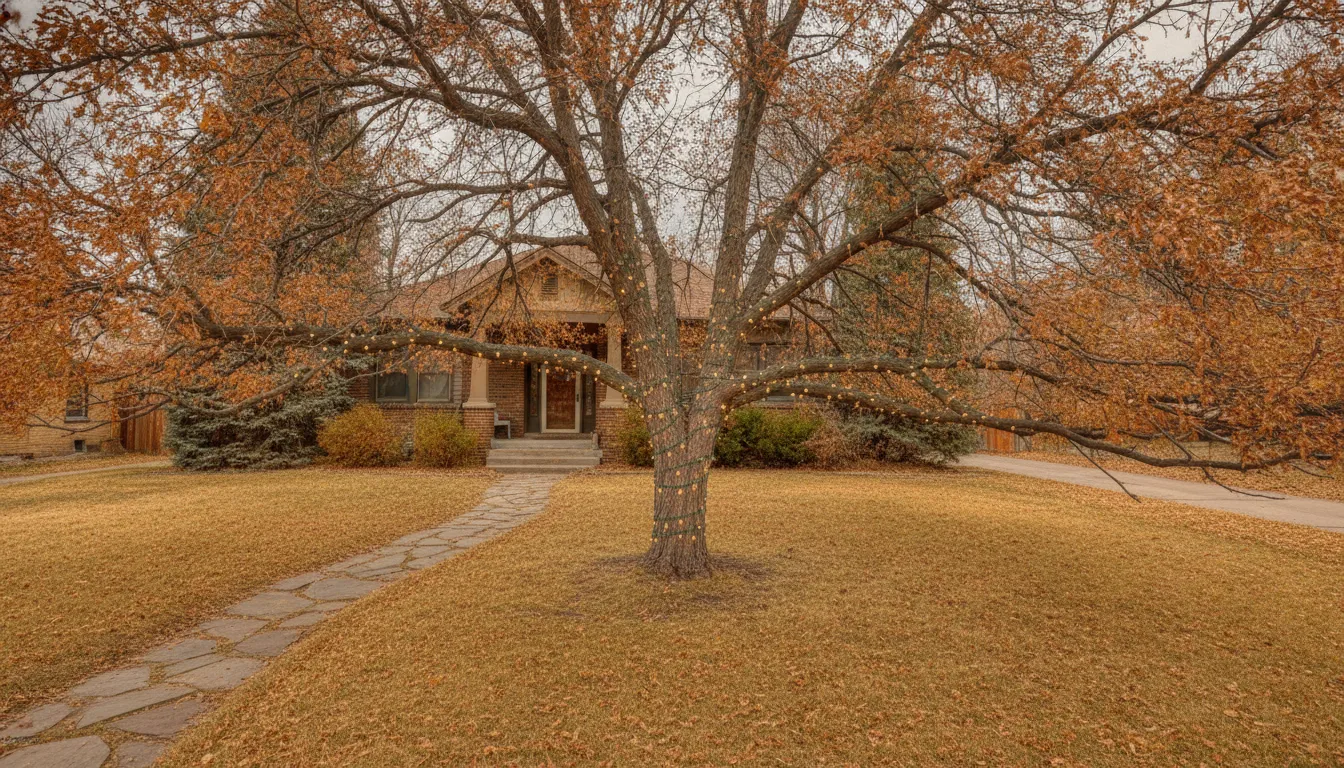
Winter tree care Colorado starts before the first heavy snow. Along the Denver metro and the Front Range, mature trees deal with dry air, cold nights, wind, snow load, and freeze-thaw swings. A tree that looks fine in October can still drop a limb, or come out of winter dry, if nobody looked at it.
The goal is not to prevent every broken branch. It is to find the problems you can act on, water when the soil is dry, and leave the tree's structure alone unless something is actually wrong.
Request a free estimate if you want an arborist to walk the trees before the storms.
What to look at before the snow
Do this on a calm day, from the ground. You are looking for things that will get worse under ice or wind, not for a perfect crown.
- Root flare.
You should see the trunk widen into the roots. Soil or mulch piled on the bark holds moisture and hides decay.
- Trunk.
Fresh cracks, missing bark, or a cavity low on the trunk are worth a closer look. A line of mushrooms at the base can mean decay you cannot see.
- Branches.
Deadwood, a crack at a crotch, a limb that already hangs, or two stems squeezing each other. Those are the pieces snow loads first.
- Lean.
A lean that showed up recently, or a tree that has started to lift soil on one side, is urgent. An old, stable lean may not be.
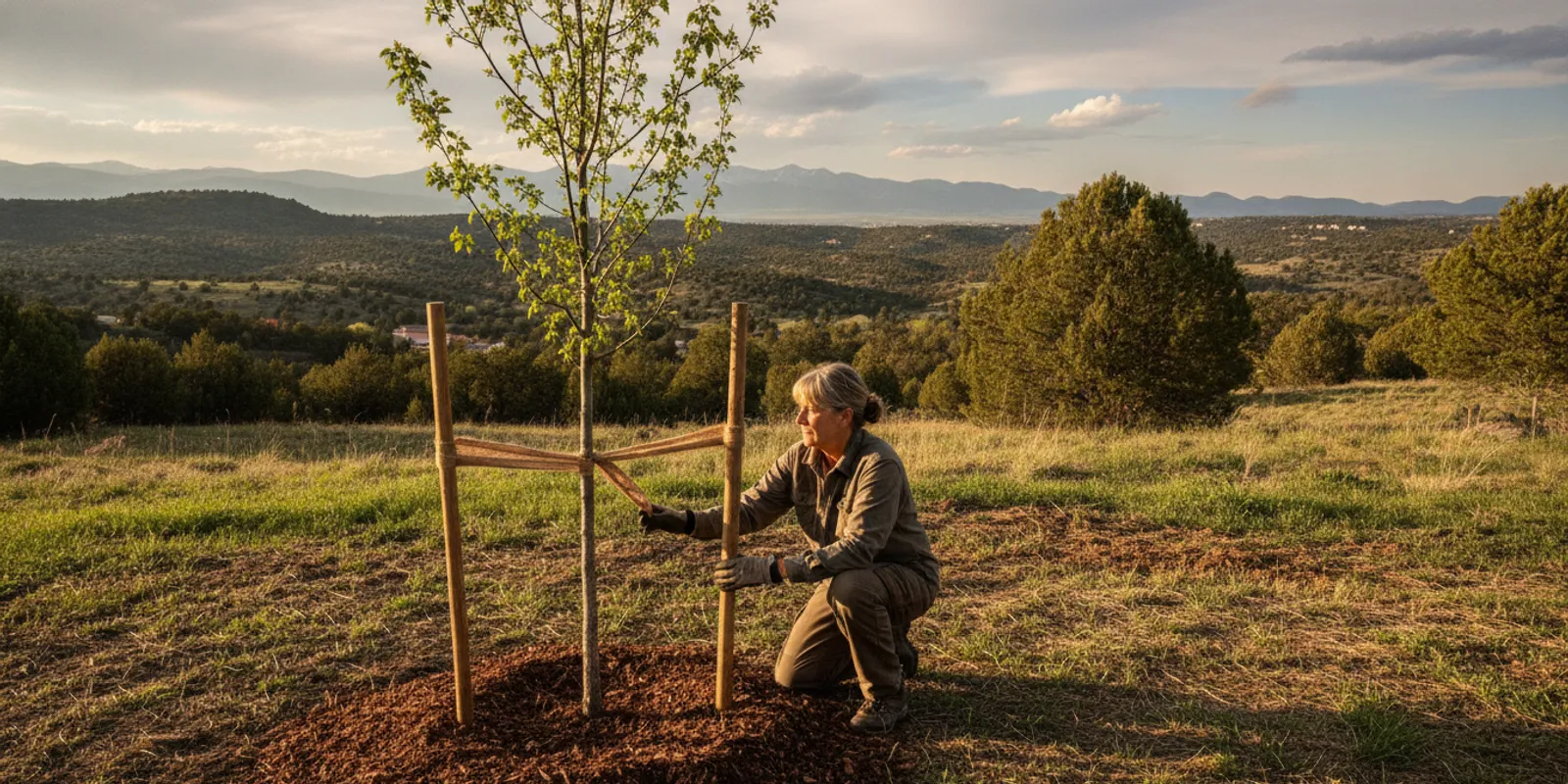
Do not tie branches together to "help" them through winter. Binding changes how the tree moves and can wound the bark. Cabling, if a valuable tree truly needs it, is an arborist's decision after seeing the structure, not a rope from the hardware store.
Water and mulch
Front Range winters are dry. Evergreens keep losing water through their needles while the soil is cold, and even leafless trees are better off going into winter with moist soil, not dust. If the fall has been dry, water deeply on a day when the air is above freezing and the water can soak in. Aim for the root zone, out toward the drip line, not a puddle against the trunk.
You do not need a weekly schedule once the ground is frozen. Check the soil. If it is powder a few inches down during a mild stretch, water. If it is frozen solid or already moist, leave it.
Mulch helps more than most products sold as winter protection. A couple of inches over the root zone moderates the freeze-thaw that heaves new plantings. Keep it off the trunk. Do not wrap the trunk in plastic. A loose guard can make sense on a young tree that animals chew, or where sun scald is a known problem on thin bark. It should come off in spring so it does not hold moisture.
Pruning, snow, and storms
Late fall and winter are a normal time to prune many deciduous trees, because you can see the structure and the insects that follow fresh cuts are quiet. Take dead, broken, and rubbing wood. Do not top the tree, and do not cut it back hard just because the crew is already out. Evergreens are usually better pruned lightly, and not sheared into a ball.
Call sooner if a limb is cracked over a roof, a walk, or a parking area, or if the tree is touching a line. That work is about the target underneath it, not about a calendar.
After a wet snow, you can gently lift snow off a small tree with a broom, brushing upward so you do not pull the branch. Do not shake a large limb, and do not climb. Ice stays put until it melts. Knocking it off is how branches break.
If a storm splits a leader or hangs a limb over the house, stay out from under it. A hanging branch is not a homeowner chainsaw job. An arborist can take the failed wood and tell you whether the tree that remains is worth keeping. That judgment depends on the damage, the care afterward, and the weather. It is not a guarantee. See tree pruning and removal for the work a visit can cover, and what goes into a pruning quote.
Construction, roads, and the thaw
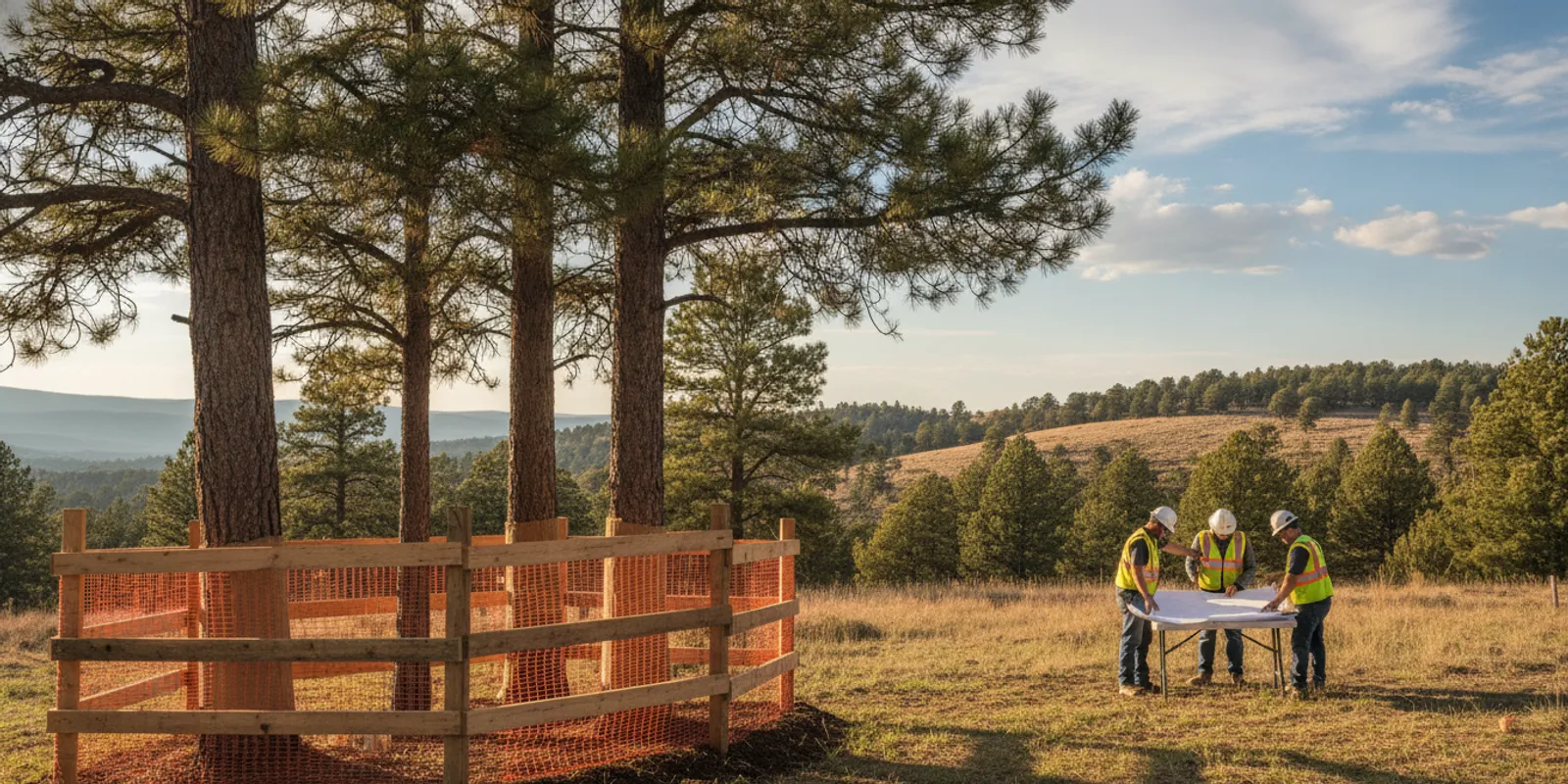
Snowplows, stacked plowed snow, and winter construction do as much damage as storms. Keep soil, gravel, and equipment off the root zone. Piling salty snow against a trunk burns bark and roots. A tree you cannot see under a snow bank is easy to hit.
When the ground thaws, look again. Heaved soil around a new planting, a fresh crack, or early dieback tells you what winter actually did. Spring pruning and any planting plans should follow that look, not a list you made in October.
A winter tree care Colorado weekend plan
You do not need a twenty-step program. Pick a weekend before the consistent freezes, and give each mature tree a few minutes. Clear mulch off the bark, look up for dead and cracked wood, and note anything over the roof or the walk. If the soil is dry, water that day while the hose still works. If you only do those three things, you have done the part that changes outcomes.
Make a short list for the arborist instead of a vague request to "get the trees ready for winter." Name the limb, the tree, and the target underneath it. That list becomes a pruning quote for real hazards, not a topping of every crown on the block. Leave cabling, bolt installs, and anything in the utility lines to that visit.
After the first heavy snow, walk again from a safe distance. Brush small trees upward. Stay off ladders and out from under anything that cracked. Call for hanging wood when the situation calls for it. Winter care lowers the avoidable failures. Wind and ice will still break sound trees, and no visit can promise otherwise.
Common questions
Should I water a mature tree in winter?
If the soil is dry and the day is above freezing, yes. One deep soak in a dry winter helps more than frequent light watering. Skip it when the ground is frozen or already moist.
Should mulch touch the trunk?
No. Keep mulch a couple of inches back from the bark so the trunk can dry.
Can I knock snow off my tree?
On a small tree, brush upward with a broom. Leave ice, and do not pull on large limbs.
Can winter care prevent all damage?
No. Wind, heavy snow, and ice will still break wood. Inspection, water, and taking the hazards you can see will lower the avoidable risk. They will not storm-proof a tree.
Walk the trees before the first real storm
A half hour under each mature tree, plus water if the fall was dry, is the useful version of winter care. Save the pruning for dead and broken wood, or for a hazard over something you care about.
Call 303-803-3850 or request a free estimate. Phones are answered Mountain Time, Monday through Friday, 8:00 a.m. to 4:30 p.m.