When to Plant Trees in Colorado: Timing for the Front Range
Knowing when to plant trees in Colorado starts with the soil, not a fixed date. Along the Front Range, plant when the ground can be worked and the tree can grow roots before hard stress hits. In the Denver metro that usually means early spring, after the ground thaws, or early fall, while the soil is still warm and before a hard freeze. Summer planting is possible, but the tree will need more water and more watching.
Timing does not rescue a bad match. Species, mature size, sun, drainage, and how you will water it matter as much as the calendar.
Request a free estimate if you want help choosing a tree that fits the yard, not just the season.
When to plant trees in Colorado
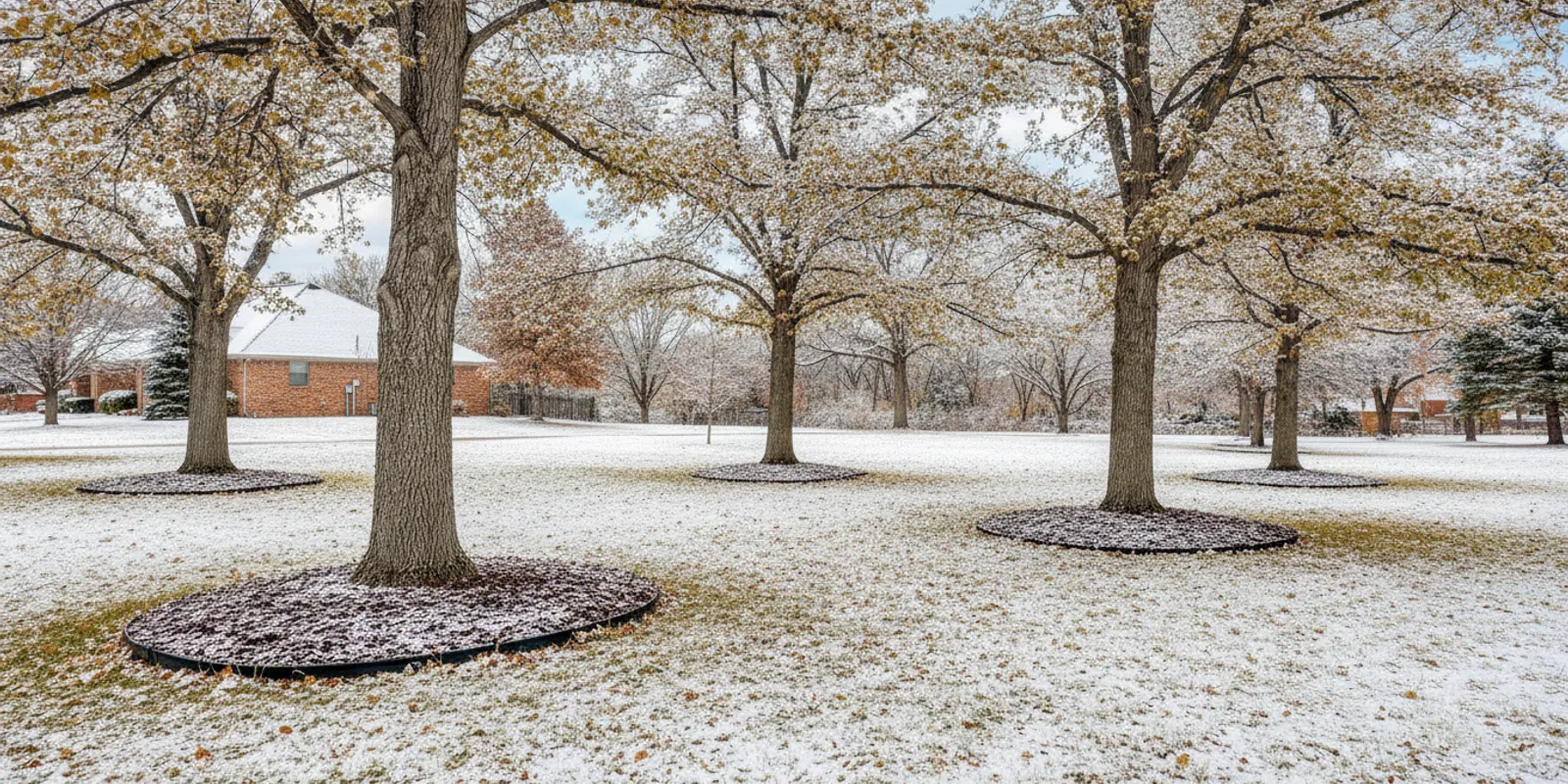
Spring planting gives the tree a full season to root in before winter. Wait until the soil is workable. Digging frozen or mud-heavy ground damages the hole and the roots. A calm, cool stretch is kinder than a week of hot wind.
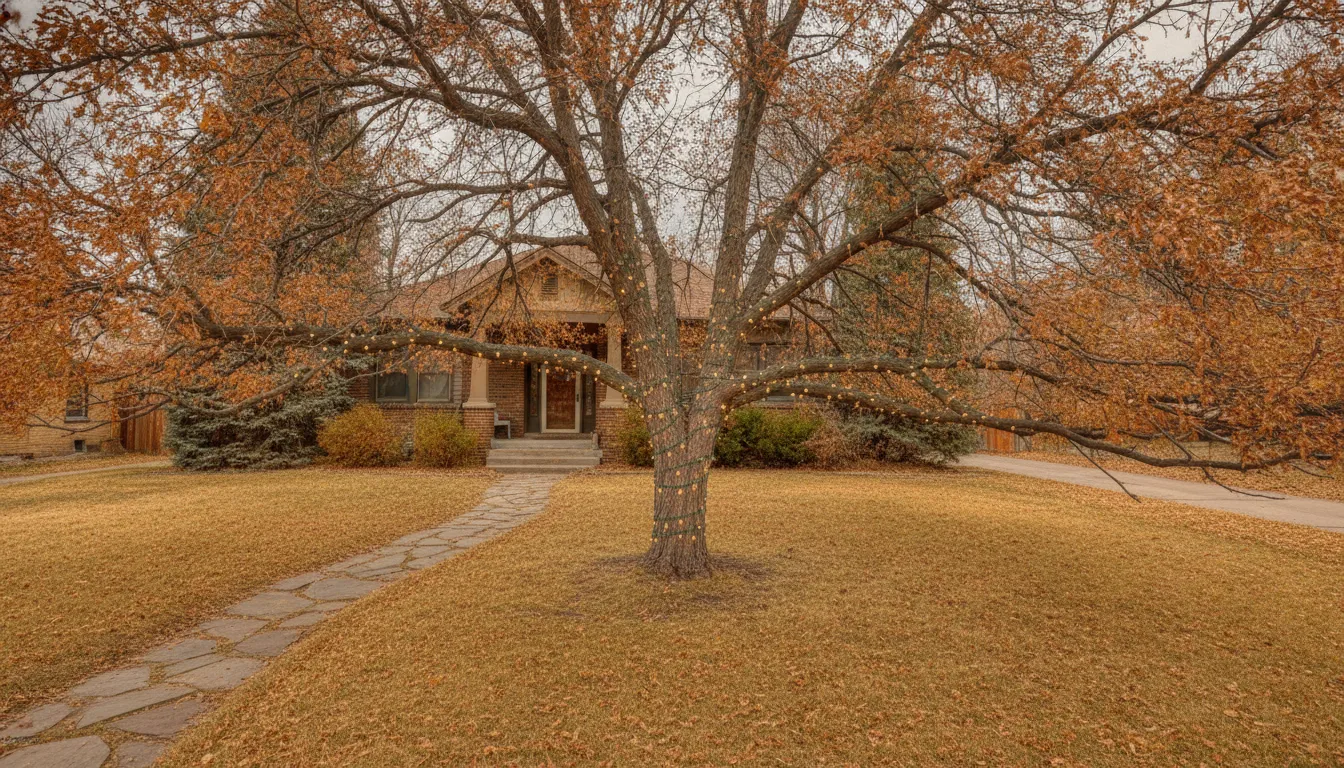
Fall planting works when the tree goes in early enough to root before the ground freezes. In much of the Denver area that means late September into October, not the week of Thanksgiving. A tree planted late, then hit by a sudden cold snap and dry wind, is the one most likely to struggle. Evergreens in particular need soil moisture going into winter, because they keep losing water through their needles while the ground is cold.
There is no single date that fits Golden, Aurora, and the higher ground toward Morrison. A colder pocket or a south-facing wall can shift the window by a couple of weeks. Watch the soil, not a headline.
What to check before you dig
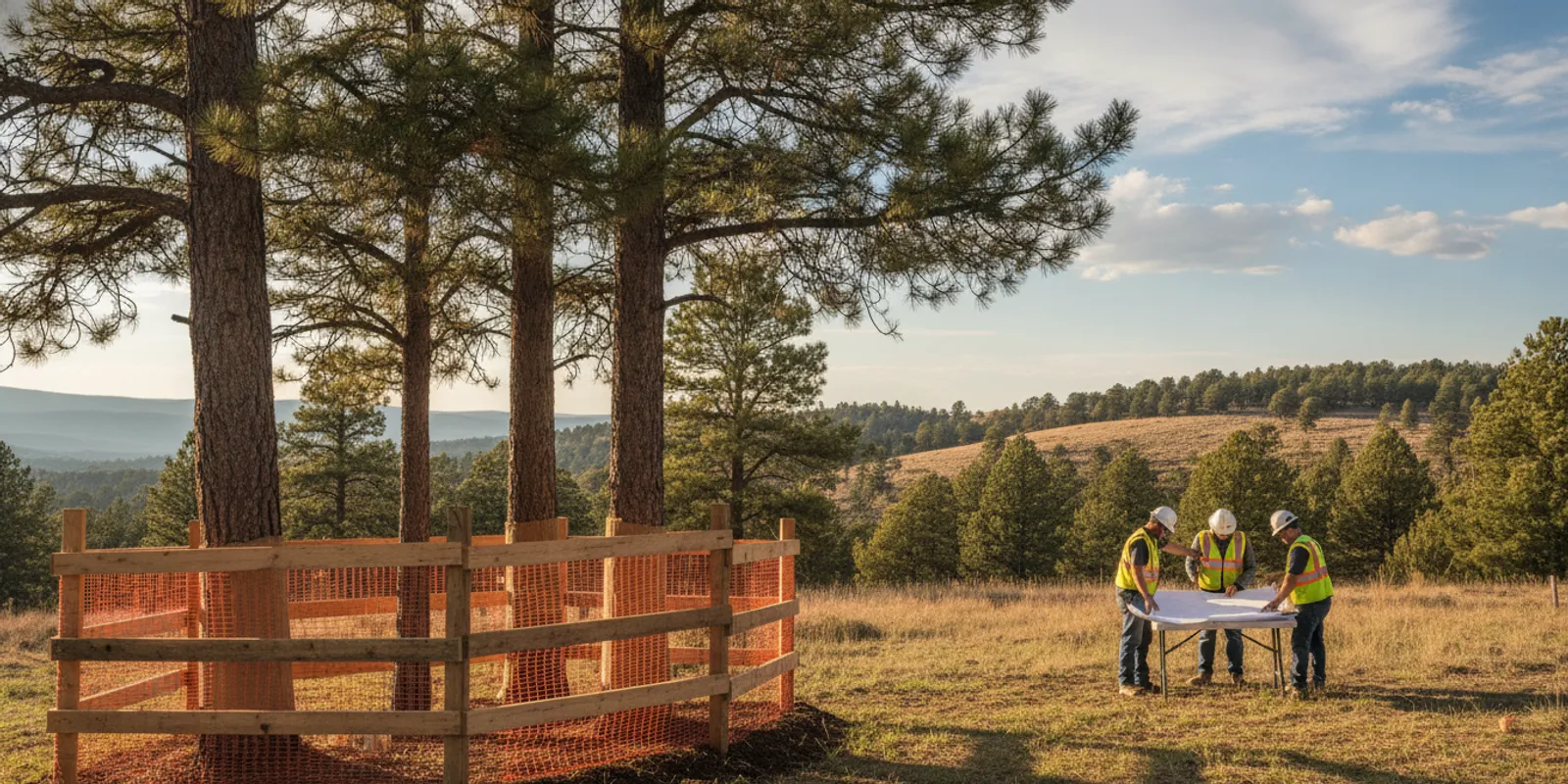
Call 811 before you dig so buried utilities are marked. Then look at the spot the way the tree will see it in ten years.
- Room.
A shade tree that will be 40 feet wide does not belong four feet from the foundation, the fence, or the overhead lines.
- Sun and wind.
Many Front Range yards are full sun plus a dry west wind. A tree sold as "easy" in a wetter climate may still need regular water here.
- Drainage.
If the hole holds water, the roots will sit wet. That is a site problem, not something extra watering will fix.
- The root flare.
Plant so the flare, where the trunk widens into the roots, sits at soil level. Do not bury the trunk, and do not leave roots exposed above the grade.
A tree planted to replace one that was removed is a separate decision from the removal. It is not included in a removal quote. Match the new tree to the space the old one outgrew. You can read about tree planting and other tree services if you want that visit to cover both the old tree and the new one.
How to plant it
Dig a wide, shallow hole, not a deep narrow one. Set the tree at flare level, backfill with the soil you took out, and water it in so the soil settles against the roots. Skip a tall mound of amended soil that sheds water away from the root ball.
Mulch the root zone a couple of inches deep, and keep the mulch off the trunk. A mulch volcano holds moisture against the bark and invites decay. Stake only if the tree cannot stand on its own, and take the stakes off once the roots hold it. A stake left on for years can girdle the trunk.
Do not put landscape fabric under a new tree
Skip landscape fabric and weed barrier around a newly planted tree. Black plastic blocks water and air from the soil. Woven weed barrier starts more open, then clogs, and weeds root through it anyway. Either layer can leave roots short of oxygen. CSU Extension says correctly applied mulch does not need fabric underneath, and that fabric is not recommended under mulch in a landscape.
Wood chips or bark mulch are the better cover. Spread a couple of inches over the root zone, keep it a few inches off the trunk, and let it break down. Mulch holds moisture, softens temperature swings, and keeps mowers off the bark. Fabric does not do that job, and a slit that stays tight around a growing trunk can girdle it. If fabric is already in the bed, cut it back well away from the trunk instead of planting through a small hole.
Wrap thin-barked trunks for the first winters
Smaller, thin-barked trees are the ones most prone to winter trunk injury on the Front Range. Sunscald, also called southwest injury, happens when a sunny winter day warms the south or southwest bark, then a cold night freezes those cells. Frost cracks are vertical splits from the same swing in temperature. Both leave a wound that can take years to close. Linden, maple, ginkgo, crabapple, redbud, and other thin-barked trees benefit from wrap. Thick, corky bark, such as bur oak, usually does not.
CSU Extension recommends a light-colored crepe-paper wrap, put on at the end of November and taken off by mid-April. Start at the base, overlap as you go, and stop at the first branches. Do not use plastic, dark wrap, or burlap, and do not leave the wrap on all year. Wrap only for the first one to three years, until the bark thickens and furrows. Wrap does not replace water. A dry fall still calls for a deep soak before the ground freezes.
You can read the full steps in CSU Extension's guide to wrapping trees for winter. Mulch guidance is in CSU Extension's mulching fact sheet.
Water after planting
A new tree on the Front Range dies from dry soil more often than from cold. Water deeply, then let the top of the soil dry slightly before you water again. A daily sprinkle that wets only the mulch does not reach the roots. Through the first season, check the soil with your hand a few inches down.
In a hot, windy June, a newly planted tree may need water more than once a week. In a cool, wet October it may need very little. There is no universal gallon chart that fits every yard. An established tree, later on, wants deep, infrequent soaks in dry spells, including a good drink before the ground freezes if the fall has been dry.
Do not promise yourself the tree is "in." Survival depends on the species, the planting, the water you give it, and the weather. No one can guarantee a tree will take.
The first year, week by week
The planting day is the easy part. For the next year, check the tree every week in warm weather. Pull the mulch back and feel the soil a few inches down. Water when it is dry, and soak it, then leave it alone until it needs more. A new tree in a hot June wind on the Front Range can need water twice a week. The same tree in a cool, cloudy stretch may need none. Hose timers that run every morning, wetting only the mulch, are a common reason the root ball stays dust-dry underneath.
Keep mowers and string trimmers off the bark. A girdled trunk will not show up as "the species failed." In the first winter, water once more before the ground freezes if the fall was dry, especially if you planted an evergreen. Refresh mulch if the wind stripped it, and keep it off the trunk. Skip fertilizing a new tree to make it grow faster. Roots are the goal in year one, not a longer shoot.
If you are replacing a tree that was removed, do not drop the new one in the old stump hole unless the stump was ground out and the chips were not the entire backfill. Planting is optional, separate from the removal, and it fails when the spot, the season, or the water is wrong. No planting date fixes that, and no one can promise the tree will take.
Match the species to a Front Range winter, not to a catalog photo. A tree that cannot take a sudden October cold, or a late April snow, will make the planting date look wrong when the real issue was the tree. Ask what has already grown on your block. Look at mature size next to your eaves and the sidewalk, and keep the planting out of the utility strip unless you know the clearance rules. Water is part of the choice. If you cannot reach the spot with a hose and you will not remember a soaker, pick a tougher, smaller tree or do not plant yet. The free estimate is for that conversation. It is not a promise the tree will thrive, and it is not included with taking another tree down.
Common questions
Can I plant in summer?
You can, if you can water it through the heat. Summer is the hardest window on the Front Range because of sun, wind, and dry soil. Spring and early fall are easier.
Should I prune a new tree right away?
Take off only broken or dead twigs at planting. Structural pruning can wait until the tree has rooted and you can see how it grows. Do not top it to "balance" the crown.
Is a replacement tree part of a removal?
No. Planting after a removal is optional. Stump grinding is also separate. If you want either, ask for it on the quote. A good starting point on timing and site choice is also covered in broader notes on choosing a tree near Denver.
Pick the season, then pick the tree
Plant in spring or early fall when you can, put the flare at grade, and plan on real watering the first year. The calendar helps. The match between the tree and the yard decides whether it lasts.
Call 303-803-3850 or request a free estimate. Phones are answered Mountain Time, Monday through Friday, 8:00 a.m. to 4:30 p.m.