Tree Protection Plans for Construction in Colorado
A tree protection plan is the set of decisions that keeps a tree alive while you build, repave, or dig near it. In Colorado the usual threats are not the saw. They are soil piled on the roots, equipment parked under the crown, a grade change, and a trench cut through the root zone.
The plan has to exist before the equipment shows up. Once the roots are crushed or the grade is buried, pruning will not undo it.
Request a free estimate if you want an arborist to look at the trees before construction starts.
Decide which trees you are keeping
Walk the site and mark three groups: trees to keep, trees in the way of the work, and trees already in poor condition. Keeping a declining tree in the middle of a foundation pour is not protection. It is a removal you postponed until it is harder.
A tree worth protecting is one you want for the long run, with a trunk and roots that can tolerate the disturbance you are actually planning. Species matters. A mature cottonwood with roots across a future trench is a different problem from a pine set well back from the work. Size matters too. The bigger the tree, the wider the root zone you have to stay out of.
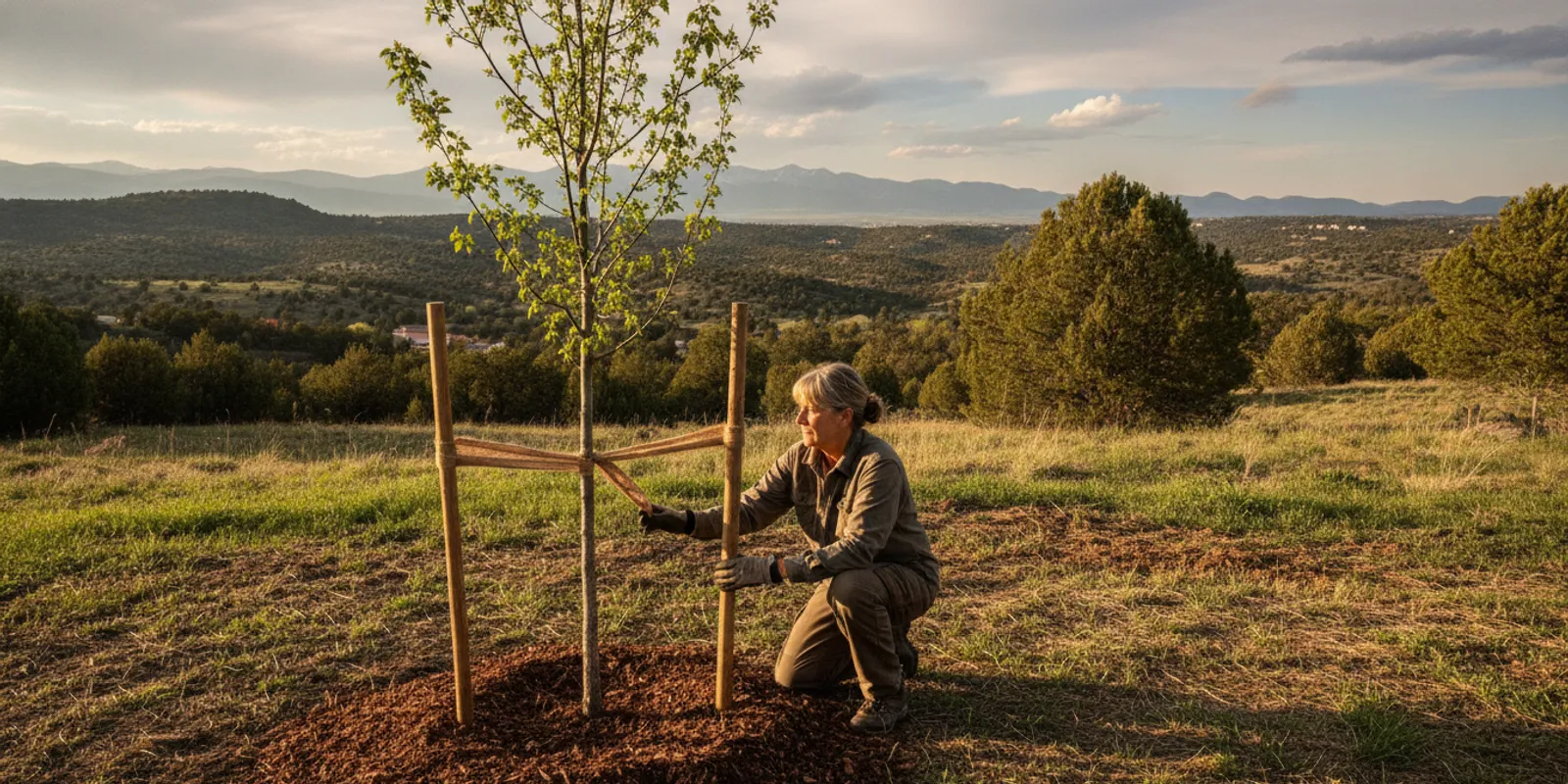
If a tree has to come out, say so in the plan. Removal, stump grinding, and planting a replacement are three separate lines. Planting is optional and should wait until the grade and the irrigation are finished, so you are not planting into a construction site.
Protect the root zone, not just the trunk
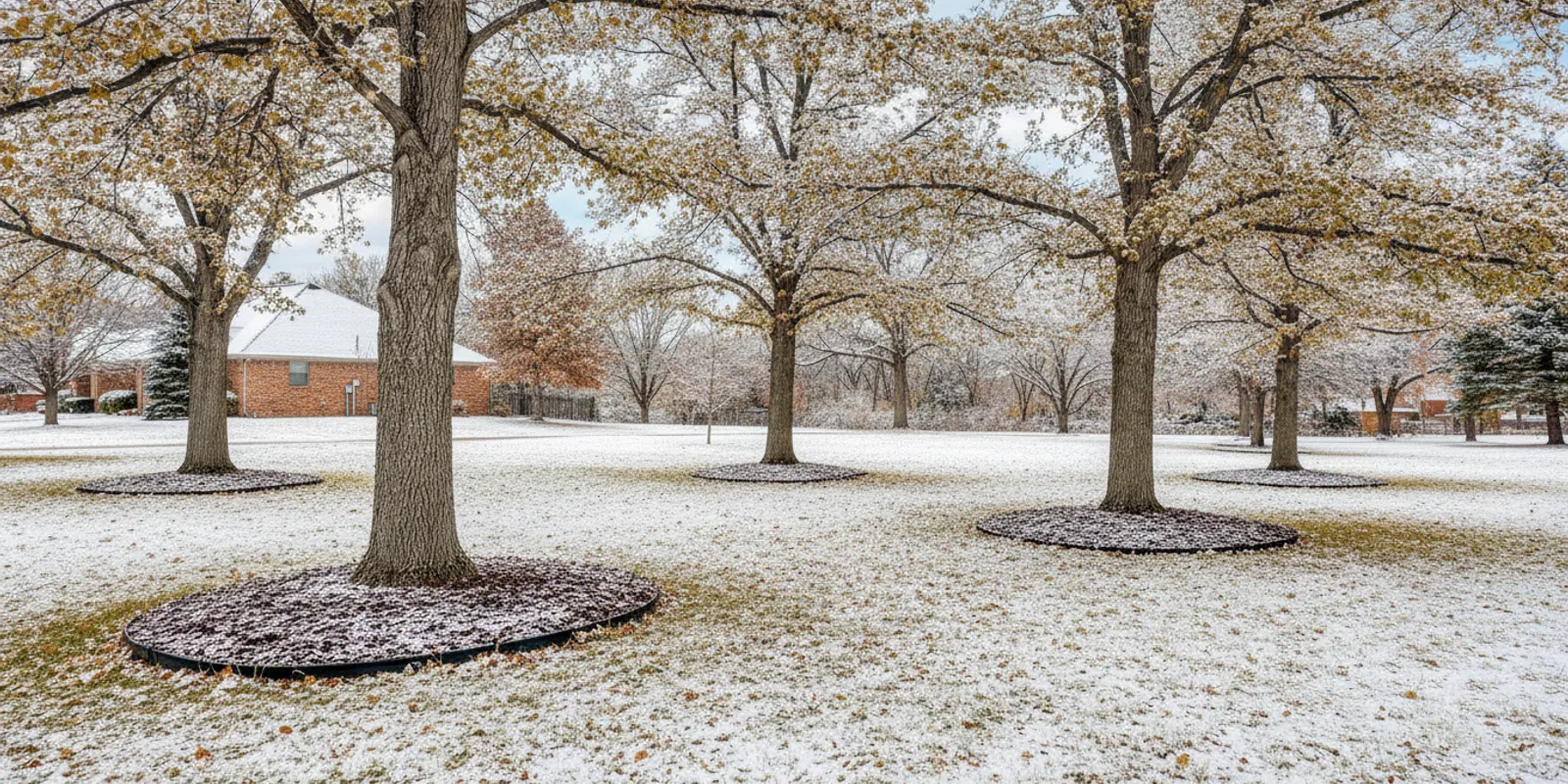
Most construction damage happens in the soil under the crown, out toward the drip line and often past it. A fence around the trunk, with a skid steer driving just outside it, does not protect the roots.
- Fence the area and keep it fenced.
No driving, no material storage, no cleaned-out concrete, no fuel.
- Do not add or remove soil over the roots.
A few inches of fill can smother them. A cut can sever them. Grade changes belong in the plan, not in a last-minute scrape.
- Put trenches where the roots are not.
If a utility has to cross the root zone, ask about boring under it instead of an open trench. An open trench through large roots can destabilize the tree.
- Keep washout and salt away.
Concrete washout and de-icing salt change the soil. The tree shows it a year later, when the crew is gone.
Pruning has a place, and it is limited. Clearance for a scaffold or a roof, taken back to a proper lateral, is reasonable. Topping a tree so a machine can swing past it is not protection. It is damage. See tree services for pruning and removal as separate scopes.
What to put in writing
A useful plan is short enough that the contractor will follow it. Name each tree, say keep or remove, show the fence on the drawing, and say who may open the fence. Add the trench routes and any grade change. Say what happens if a protected root three inches across is hit: stop, and call before cutting it.
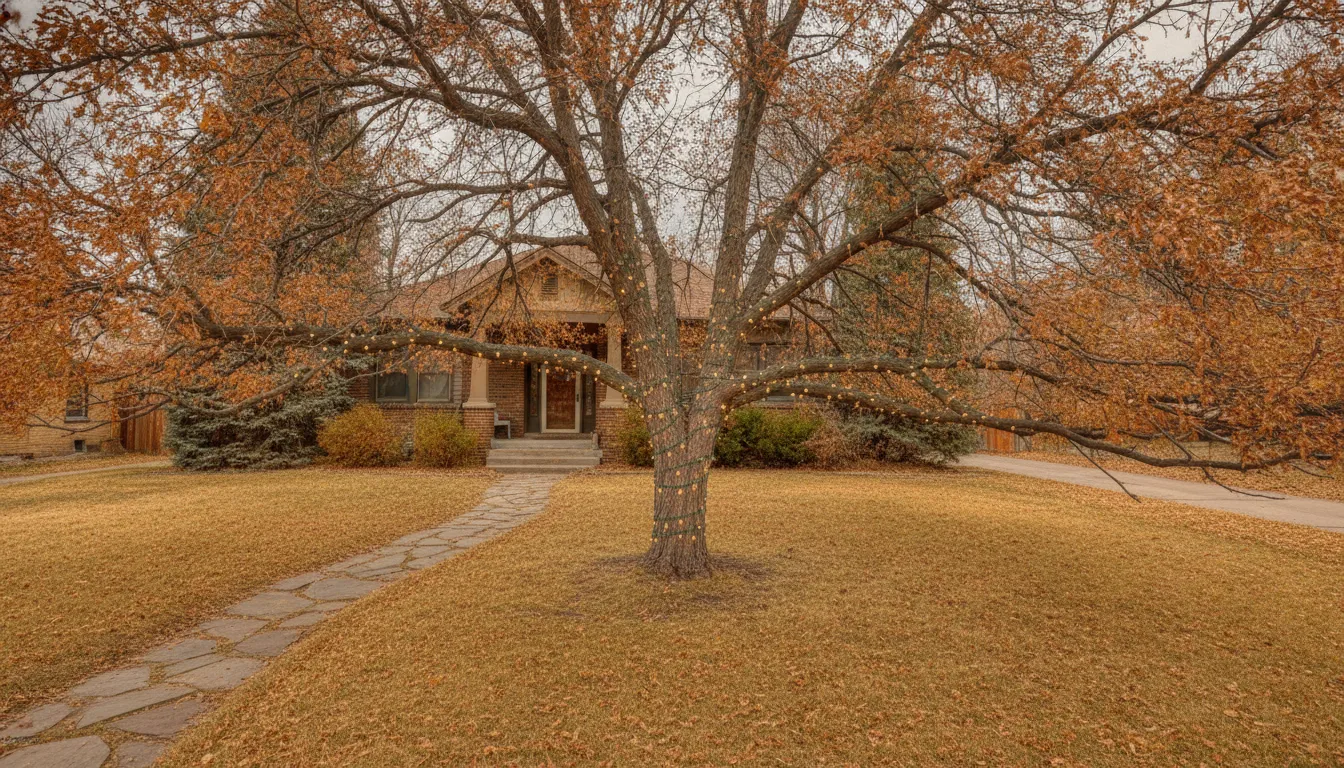
Ask whoever is quoting the tree work to look at the site before the bid, not from a survey alone. Access, overhead lines, and how close the tree stands to the new work all change the job. A plan written for a generic lot will not match a tight Denver lot with a tree against the alley.
After the work, water the kept trees through the next dry season. Construction stress and Front Range drought stack. Do not expect a guarantee that a tree inside a work zone will thrive. Survival depends on how many roots were lost, the species, the aftercare, and the weather. A related look at moving a tree instead of working around it is in transplanting mature trees in Colorado.
During the job and after the crew leaves
Walk the site once a week while the work is active. The failure is usually ordinary: a gate in the fence left open, a stack of pavers that "will only be there overnight," a trench crew that did not see the note on the drawing. Move those the day you see them. A root that sits under a pallet for a month is a root you have lost. If someone cuts a root thicker than about three inches, stop and call before more of them are cut. A clean cut and a change in the route can matter. A dozen torn roots cannot be pruned back to health.
When the machines are gone, pull the soil and debris off the root zone, repair the grade to what the plan allowed, and water through the next dry season. New construction often changes drainage, so a tree that used to get roof runoff may now sit high and dry, or the reverse. Watch the crown the following summer for small leaf and dieback. That delay is normal. It is also why a guarantee would be a lie. The owner decides whether a declining tree stays, with an arborist's description of what was lost, not with a promise.
If the plan said remove, do not leave that tree standing in the middle of the finished patio because it "still looks green." Removal, stump grinding, and any replacement planting are easier before the new hardscape locks you out. Plant after the irrigation and the final grade exist.
Show the plan to every trade, not only the general contractor. The irrigation crew, the concrete crew, and the delivery driver are the people who actually enter the fenced area. A note in a spec book that nobody on site has read is not protection. Walk them to the fence once, and say what happens if it comes down: work stops on that side. If a tree was mis-marked and the design cannot avoid it, change the plan on purpose. Decide to remove it, grind or leave the stump as its own choice, and plant later if you still want a tree. An accidental loss, buried under a new driveway, is the outcome the plan exists to prevent.
Put a phone number on the fence. The person running the machine should know whom to call before they cut a root, not after. That single line prevents more damage than a long specification nobody has on site.
Common questions
Is a fence around the trunk enough?
Usually no. The roots you need extend well past the trunk. Fence the root zone the plan identified, and keep equipment out of it.
Can you prune a tree back so construction can get closer?
Light clearance pruning, to a real side branch, yes. Cutting the crown in half, or burying the roots and compensating with pruning, no. That trades one injury for another.
Who decides if a damaged tree stays?
An arborist can describe what was lost and what the likely result is. The owner decides. Nobody can promise the tree will recover.
Write the plan before the machines arrive
Mark the trees, fence the roots, and put trenches and grade changes on paper. That is the work. Everything after a root is torn is a salvage visit.
Call 303-803-3850 or request a free estimate. Phones are answered Mountain Time, Monday through Friday, 8:00 a.m. to 4:30 p.m.