Wildfire Risk and Trees in Colorado: How to Evaluate Your Property
Wildfire risk on a Front Range property is not one number, and a tree is not the whole story. What matters is how close fuel sits to the house, how continuous it is, and what the trees themselves are doing: dead, crowded, or touching the roof.
This is a way to look at your own lot before you hire anyone. It is not a fire-danger rating, and it is not a certified wildfire inspection.
Request a free estimate if you want an arborist to walk the trees after you have looked.
What to look at
Walk from the house outward on a dry day and write down what you see. You are sorting the lot, not scoring it.
- The first few feet.
Needles on the roof, shrubs against siding, firewood under the deck, and branches resting on the structure. This band matters more than the back fence.
- Tree condition.
Dead trees, hanging deadwood, and trunks with the bark gone at the base. A dead tree next to the house is a different problem from a green one thirty feet away.
- How the crowns connect.
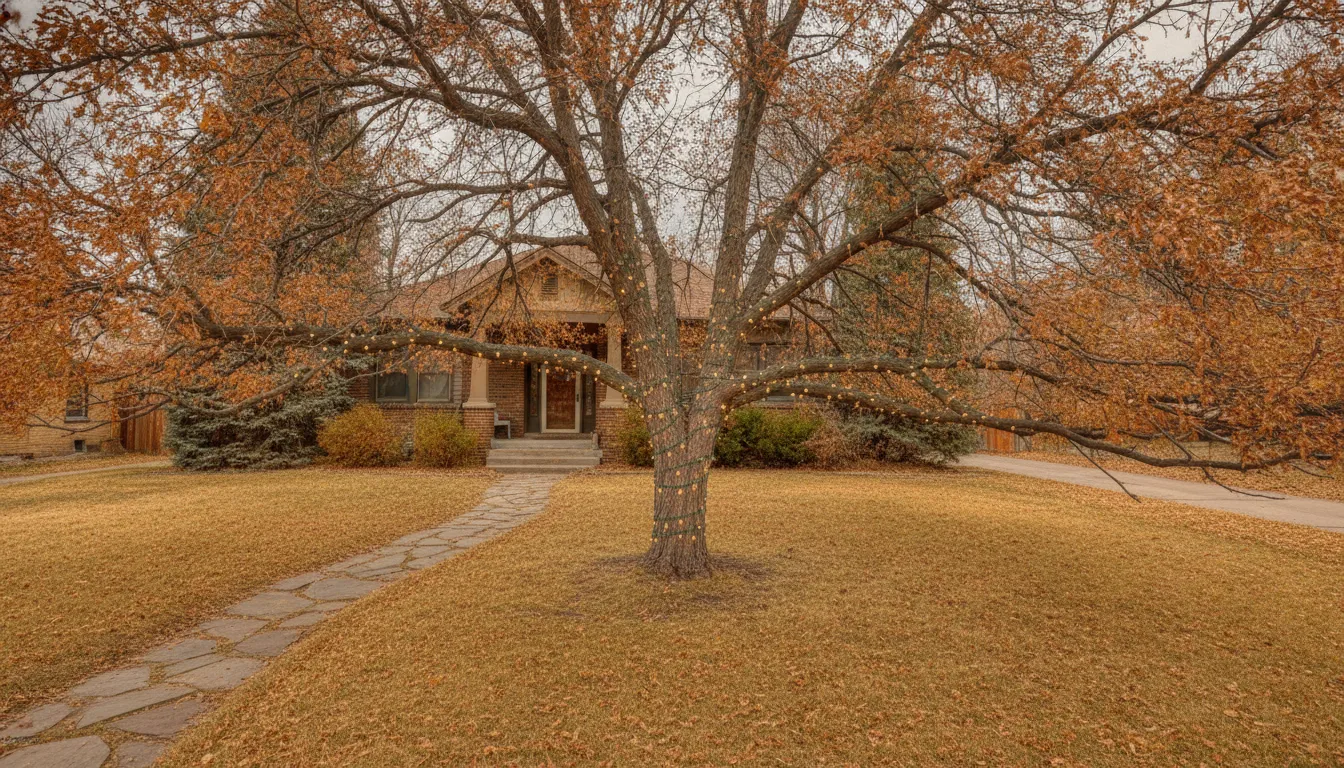
A line of trees with touching crowns gives a fire a path. Gaps break that path. There is no single spacing number that fits every community.
- The ground.
Tall dry grass, juniper that runs under the trees, and old slash piles. Tree work that leaves the debris in place has not reduced the fuel.
- Slope and wind.
A slope below the house, or a west wind that lines up with a draw, changes how a fire would arrive. A flat lot in the city is not a canyon lot.
- Access.
A drive blocked by limbs, a gate a truck cannot use, or a house number hidden by a hedge. People have to be able to reach the house.
Local fire districts and insurers sometimes publish their own checklists. Those are the documents to follow if someone has asked you for compliance. An arborist's notes do not replace them.
What the trees can and cannot change
Tree work addresses the trees. Pruning can lift lower branches and take deadwood. Removal can take out a dead tree or one that sits on the roof. Neither one fireproofs a house. Embers, a wood roof, and an open eave are building questions. Do not expect a pruning visit to answer them.
Topping is not mitigation. Cutting a crown flat adds weak sprouts and does not create useful space. If a tree is in the wrong place, remove it. If it can stay, prune to real branches.
Removal does not include stump grinding or a new tree. Planting a replacement is optional, and the new tree should not recreate a crown against the eaves. Wood from the job should be chipped or hauled. A slash pile at the back of the lot is still fuel.
The hands-on tree steps live in defensible space work for Colorado homeowners. The service list is on tree services.
When to call someone
Call an arborist when the look shows tree work: dead or hanging limbs, a trunk you do not trust, crowns you want separated, or a tree that has to come down near the house. Call the fire district or your insurer when the question is whether the property meets their rules. Those are different calls.
Homeowners can rake, move firewood, and pull small brush. Climbing and felling near a house are crew work. If you are comparing two lots, or talking with a neighbor about a shared line of trees, walk both sides before anyone cuts. A tree on the line is not yours to remove alone.
Nothing in a walk-through guarantees the outcome of a fire. Weather, house materials, and what is burning upwind all sit outside a tree quote.
Turn the walk into a short list
When you come back inside, write five lines, not a report. What touches the house. What is dead. Where two crowns connect. What is piled on the ground. Whether a truck can reach the door. That list is what you hand to an arborist, and it is what you compare against any checklist your fire district or insurer already gave you. If their list and your lot disagree, follow their list for compliance and use the arborist for the trees.
Price follows the list. A day of deadwood and brush is a different job from removing three large trees over a roof. Ask for the debris to leave the site, or to be chipped and placed where it will not sit against the wall. A neat crown over a slash pile has not changed your risk much. Stump grinding and any new tree are extra lines, and a new tree should not land under the eaves.
Repeat the walk after the work and again next spring. Fuel grows back. Nothing in the list, and nothing in the quote, means the house will survive a fire or that an insurer will change your policy. It means you have looked at the trees honestly and done the part of the work that is actually tree work.
Bring the list to the right person. An arborist can price the deadwood, the removals, and the pruning. Your fire district can tell you whether they want a particular inspection. Your insurer can tell you what they will and will not accept as documentation. Mixing those calls is how a tree quote gets treated as a certificate it is not. While you wait, you can still move firewood, clean gutters, and pull brush you can reach from the ground. Leave the climbing alone. After the work, walk the same route again. If the debris is gone and the limbs are off the roof, the tree part of your list is done until next year. The house, the roof, and the weather remain what they were.
If the list is short, the job may be short. Say so. A homeowner who only needs gutters cleared and one dead limb off the roof should not be sold a lot-clearing day. Match the work to what you wrote down, then look again next year. Fuel returns. The walk is the habit. The quote is just one year of it.
Common questions
Does a green tree mean low risk?
No. A green crown that touches the roof, or a row of green trees with no gap, can still carry fire. Condition and spacing matter together.
Will cleaning up the trees lower my insurance?
Maybe, and maybe not. Ask the carrier what they ask for. Do the tree work because the fuel is there, not because a premium change was promised.
Is this the same as a fire-mitigation certificate?
No. Natural Tree Care does the tree work that supports defensible space. A certified inspection, if you need one, comes from whoever your district or insurer names.
Write down what is closest to the house
The useful result of a walk is a short list: what touches the house, what is dead, and where the crowns connect. That list is what an estimate can price.
Call 303-803-3850 or request a free estimate. Phones are answered Mountain Time, Monday through Friday, 8:00 a.m. to 4:30 p.m.