Maple Trees in Colorado: Types, Site Selection, and Care
Maple trees Colorado homeowners consider can offer shade and strong fall color, but the right choice depends on the yard. Before choosing a variety, look at mature size, sun exposure, soil drainage, and how you will water the tree through dry periods. A tree that fits the site is easier to establish and maintain.
What should you compare among maple trees in Colorado?
“Maple” covers trees with different growth habits and site preferences. Nursery labels can help narrow the choices, but confirm the exact species or cultivar and its expected mature height and spread before you buy. Do not select by fall color alone. A small tree in a nursery pot can grow into a canopy that crowds a roof, driveway, overhead lines, or neighboring plants.
For each candidate, compare these points:
- Space:
Check the expected canopy width and height, then account for nearby buildings, paving, utilities, and other trees.
- Sun:
Note whether the planting location gets full sun or shade during the day. Match the tree’s stated light needs rather than assuming every maple thrives in the same exposure.
- Soil and drainage:
Look for compacted soil, standing water after rain, or very dry areas. Roots need room and suitable moisture; a poorly drained or tightly compacted site may be a poor fit.
- Water access:
Consider whether you can water deeply during establishment and during extended dry weather.
- Seasonal conditions:
Colorado yards can experience dry air, strong sun, wind, temperature swings, and winter conditions. A sheltered, well-suited site can reduce stress, but no planting location removes all weather risk.
If the site is tight or exposed, compare another kind of tree as well as other maple options. The best tree is not necessarily the one with the most dramatic color; it is the one that can fit the space and care routine.
How do you choose a site?
Walk the yard at different times of day before deciding. Notice where the sun falls, where water collects, and how close the planting spot is to structures and hard surfaces. Check for overhead and underground utilities before digging, and follow local requirements that apply to your property.
Maples generally need a site that can support their eventual root and canopy growth. Avoid squeezing a large tree between a house and driveway simply because the young plant fits there. Roots and branches may eventually meet obstacles, leading to conflicts or more maintenance. If you are replacing a removed tree, do not assume the old location is automatically the right one; soil conditions, available space, and the new tree’s mature form still matter.
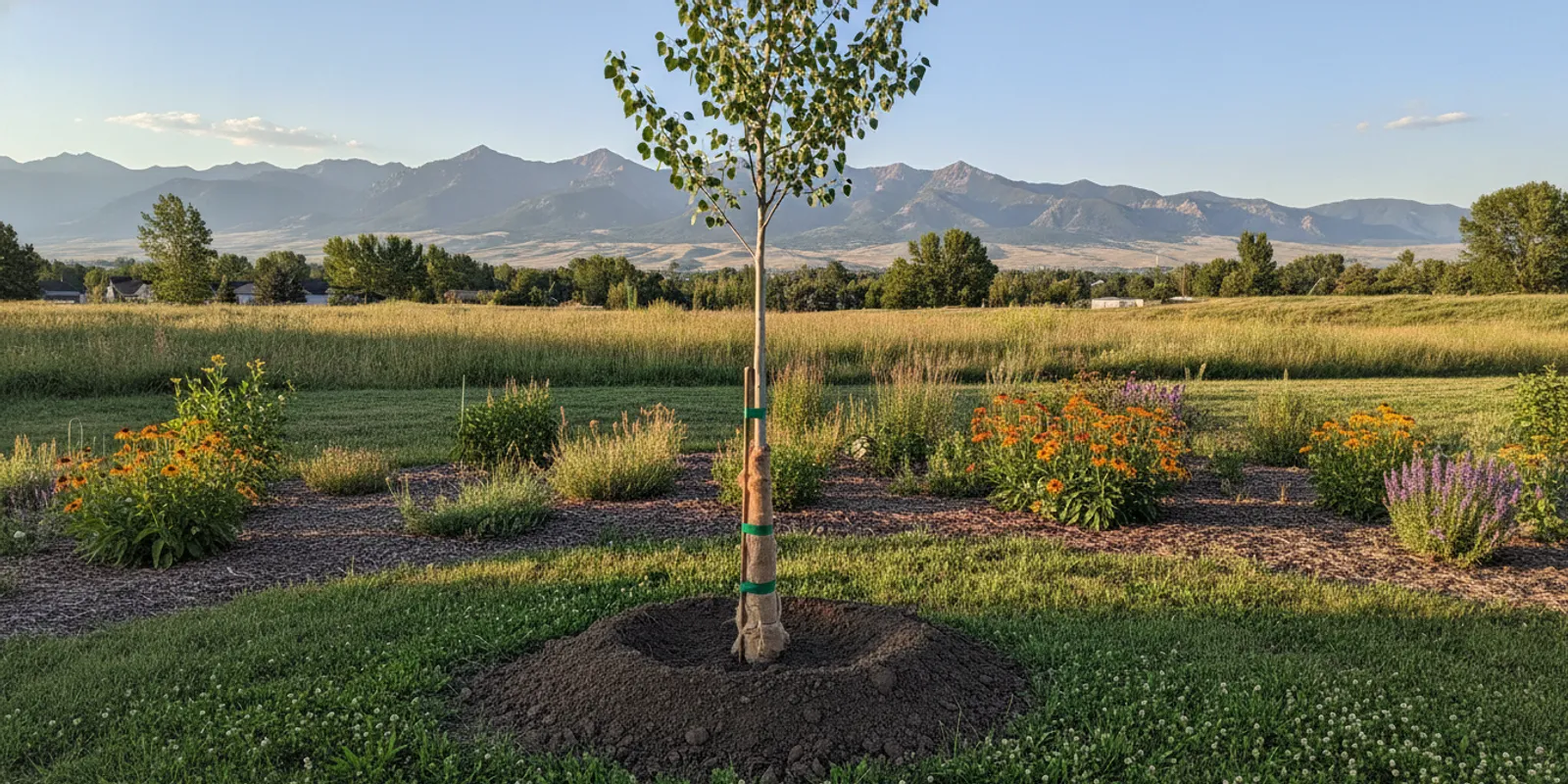
Prepare the ground across a broad area rather than making a narrow, isolated pocket of loose soil. Do not bury the trunk flare. Set the root flare at or slightly above surrounding grade, backfill with the excavated soil, and water to settle it. Avoid piling mulch against the trunk. A thin, broad mulch layer can help the soil retain moisture, but leave space around the bark.
How should you plant and water a maple?
Plant when the soil is workable and conditions allow you to water consistently. Handle the root ball carefully, remove containers or materials that will not break down as directed, and loosen circling roots if present. Dig a hole wider than the root ball but no deeper than needed to keep the root flare correctly positioned. Water after planting, then check the soil regularly rather than following a rigid calendar.
During establishment, water slowly enough to moisten the root zone without leaving the area saturated. The amount and frequency depend on soil, weather, tree size, and drainage. Hot, dry, or windy conditions can increase water needs; cool or rainy periods can reduce them. Check moisture a short distance below the surface. If it is still wet, wait; if it is drying, water thoroughly. Avoid frequent shallow sprinkling that wets only the surface.
Keep competing grass and weeds away from the trunk area, and maintain mulch without letting it touch the bark. Protect a young tree from accidental mower or string-trimmer damage. For more planting steps and first-year care, see our guide to when to plant trees in Colorado and our article on tree planting in Denver.
What seasonal stress should you watch for?
Newly planted and established trees can show stress during periods of heat, drought, wind, or abrupt temperature change. Watch for wilting, early leaf drop, scorched leaf edges, or branch dieback. These signs can have several causes, so a single symptom does not identify a specific problem. Check recent watering, drainage, trunk condition, and changes around the roots. Avoid adding fertilizer or applying a treatment unless there is a clear reason and the product or approach is appropriate.
As winter approaches, continue checking soil moisture while the ground is workable, especially after a dry fall. Do not overwater frozen or saturated soil. Young trees may need protection from animal damage or sunscald depending on the site and trunk. Use an appropriate tree wrap only when needed, and remove it as directed rather than leaving it on indefinitely. Our winter tree watering guide covers how to assess moisture in colder months.
When and how should you prune a maple?
Start with a purpose: remove dead or broken branches, address a clear structural concern, or maintain safe clearance. Avoid routine heavy pruning that removes a large share of the canopy. Make clean cuts just outside the branch collar; do not leave long stubs or cut flush against the trunk. Do not top a tree to control its height. Topping can leave large wounds and stimulate weakly attached shoots.
Pruning timing can depend on the reason for the work, the tree’s condition, and local pest or disease concerns. Dead, damaged, or hazardous limbs may need attention regardless of the ideal season. For larger limbs, work near power lines, or a tree with visible decline, get a site-specific assessment rather than attempting risky work yourself. Natural Tree Care describes pruning, planting, removal, and other options on its tree services page; an estimate or consultation can help clarify the work a particular tree may need.
Common questions
Will every maple grow well in Colorado?
No. Results depend on the species or cultivar, site, establishment care, and weather. Check local suitability and match the tree to the yard’s space, sun, soil, and water conditions before planting.
Can I plant a maple close to my house?
Use the tree’s expected mature size and the distance to structures, paving, and utilities to decide. A young tree’s current size is not a reliable guide to the space it will need later.
Should I prune a maple every year?
Not necessarily. Prune for a specific need, such as deadwood, damage, or clearance, and avoid removing too much live canopy. The right schedule depends on the tree and the reason for pruning.
Choosing a maple starts with the yard, not the color of the leaves. Compare mature size and site needs, plant carefully, and adjust watering and pruning to the tree’s condition and the season.