When to Trim Trees in Colorado
When to trim trees is a property question, not a single month on the calendar. Along the Front Range, late winter into early spring is the usual window for most shade trees, because the tree is dormant and the branch structure is easy to see. That window moves with the species, the tree's condition, what you want the tree to do, and whether a limb is already a hazard.
A broken limb over a roof does not wait for dormancy, while a healthy oak or a spring-flowering crabapple should. No calendar date guarantees the tree will respond well. The result still depends on the tree's condition, how it is cared for afterward, and the weather that follows the cut.
Call (303) 803-3850 for a free estimate, or send the form if you want an arborist to look at the tree before you pick a date.
When to trim trees on the Front Range
For most deciduous shade trees that are at least a couple of years old, late winter through early spring is the practical window. Pueblo County Extension puts that around mid-February into early March, once the tree has stopped putting on new growth. Cuts made before bud break close with less stress, and you can see crossing, rubbing, and weak attachments without leaves in the way.
Colorado State Forest Service guidance says the same thing in plainer words: prune shade and ornamental trees in the dormant season, from late winter into early spring. Avoid the two transitions, when buds are just breaking and when leaves are turning color in fall. Late fall and early winter cuts can push soft growth that the tree then has to carry into cold weather. Pueblo County Extension's note on late-winter pruning is the short public version of that window.
Denver, Lakewood, Aurora, and the lower suburbs usually hit that window first. Yards toward Golden, Morrison, and the higher ground can stay frozen longer. A south-facing wall in Englewood can bud out while a shaded lot in Arvada is still hard. Watch the tree, not a headline from a warmer state. If buds are swelling hard, you are already late for structural work on that species.
Evergreens are a lighter job, and they run on a different clock. Shape pines, spruce, and fir on the new growth. Do not head old wood back to bare stubs. If you only need a broken spruce limb gone, do that when you see it. Shortening a pine's candles is a late-spring job, after the new growth elongates, and it is easy to overdo. A spruce or fir cut back into old wood with no needles will not fill in the way a shade tree does.
A brand-new tree is not on this calendar either. At planting, take off only what is already broken or dead. The first real structural look can wait a year or two, once you can see which stem wants to be the leader. Pruning a sapling hard on planting day does not make it establish faster. It asks a tree with few roots to feed a smaller crown it did not choose.
Our tree trimming guidance on the home page is the place to start when the decision is about your yard, not a general season. We prune, remove, plant, and consult across the Denver metro. We do not treat one season as the only time a crew can work.
Species that should not follow the shade-tree calendar
A few common Front Range trees are better on a different clock. Using the shade-tree date on these is how people open a disease window or cut off the flowers they wanted.
Tree | Better timing | Why it differs |
Most shade trees, including linden, ash, honeylocust, and many maples. | Late winter to early spring, while the tree is dormant. | The structure is visible, and the tree is not pushing new growth. |
Spring bloomers, including crabapple and some ornamental pears. | Soon after they finish flowering. | Winter cuts remove the buds that would have bloomed. |
Apple, pear, crabapple, mountain ash, and hawthorn. | Dry winter days. Clean tools between diseased trees. | Fire blight spreads on pruning tools in warm, wet weather. |
Maple, birch, elm, black walnut, and some honeylocust. | Summer, if the sap bleed bothers you. | Late-winter cuts can bleed. The sap run does not harm the tree. |
Oak. | The dormant season, not during warm-month beetle flight. | Fresh cuts in warm months can invite oak wilt where that disease is a concern. |
Sap bleed looks dramatic, but it is usually harmless. Maples, birch, elm, and black walnut can run after a late-winter cut. If the look of the sap bothers you, wait and prune those trees in summer rather than treating the bleed as a reason to seal the cut.
Fire blight is the exception that is about disease, not looks. It hits apple, crabapple, pear, mountain ash, and hawthorn. Colorado State Forest Service notes say to prune those hosts on dry winter days, and to disinfect tools between cuts on a diseased tree. A June cleanup of blighted shoots is sometimes needed, but that is a sanitation cut, not a full crown reduction.
If you are choosing a fruit tree rather than timing a trim, the fruit trees that grow on the Front Range are a separate decision. This page does not pick varieties.
Condition, goals, and hazards change the date
Start with why the tree needs work. A trim with no goal takes live wood the tree still needs. Pueblo County Extension's rule is simple: do not remove living branches without a specific reason, and know whether you are after structure, clearance, or a safer crown.
Three situations move the date off the dormant window:
- Dead, broken, or hanging wood.
Take it any time of year. A cracked limb over a walk, a driveway, or a roof is a hazard, not a seasonal project.
- Structure on a young shade tree.
One or two well-chosen cuts in late winter do more than a hard prune later. Keep the work light. A tree still in active growth can often spare about 10 to 25 percent of its live wood in a year. A mature tree that is near full size should stay closer to 5 to 10 percent.
- Clearance and shape.
Raising the canopy over a sidewalk, or thinning a dense crown so wind moves through it, still belongs in the dormant season unless a limb is already failing.
Storm damage is the case that should not wait. After a heavy snow or a wind event, a hanging limb is a safety problem the day you see it. We do that work when the situation calls for it, including after a major storm. That is not a promise of round-the-clock coverage or a set response time. If the whole tree is failing, emergency tree removal is a different job from a trim.
Summer pruning is real work, not a mistake by default. We prune in summer when the goal is light clearance, to slow a fast grower, or to deal with a hazard. What summer is poor for is a heavy structural cut on a stressed tree in a hot, dry spell. The tree is already spending water. Taking a large share of the crown then asks it to recover in the hardest months on the Front Range, when west wind and low humidity are already pulling moisture out of the leaves.
The goal belongs in the same conversation as the month. More flowers on a crabapple means you wait until after bloom, thin lightly, and stop. Sidewalk clearance under a linden can wait for late winter, and you raise the canopy a little each year instead of all at once. A cottonwood or poplar that drops limbs will usually need repeat visits. One hard cut will not turn it into a small ornamental. No trim guarantees the tree will be saved. Condition, follow-up care, and the weather still decide that.
Hazards have their own list, and none of them care what month it is. A split crotch with included bark, a limb cracked at the union, mushrooms at the base, or a lean that appeared after a storm are reasons to call, not reasons to wait for dormancy. So is a limb already resting on a roof, a fence, or a service drop. Describe what sits under the tree when you ask for a look. A quiet backyard cottonwood and the same tree over a driveway are different jobs.
How much to take, and what to leave
Timing does not fix a bad cut. Topping, which is cutting the main leader or large limbs back to stubs, is not a way to make a tree smaller on a schedule. It sprouts weak wood and opens large wounds. If you are looking at a quote that describes heading the whole crown back, read how topping differs from pruning before you book the date.
For ordinary shade trees, a useful year looks like this:
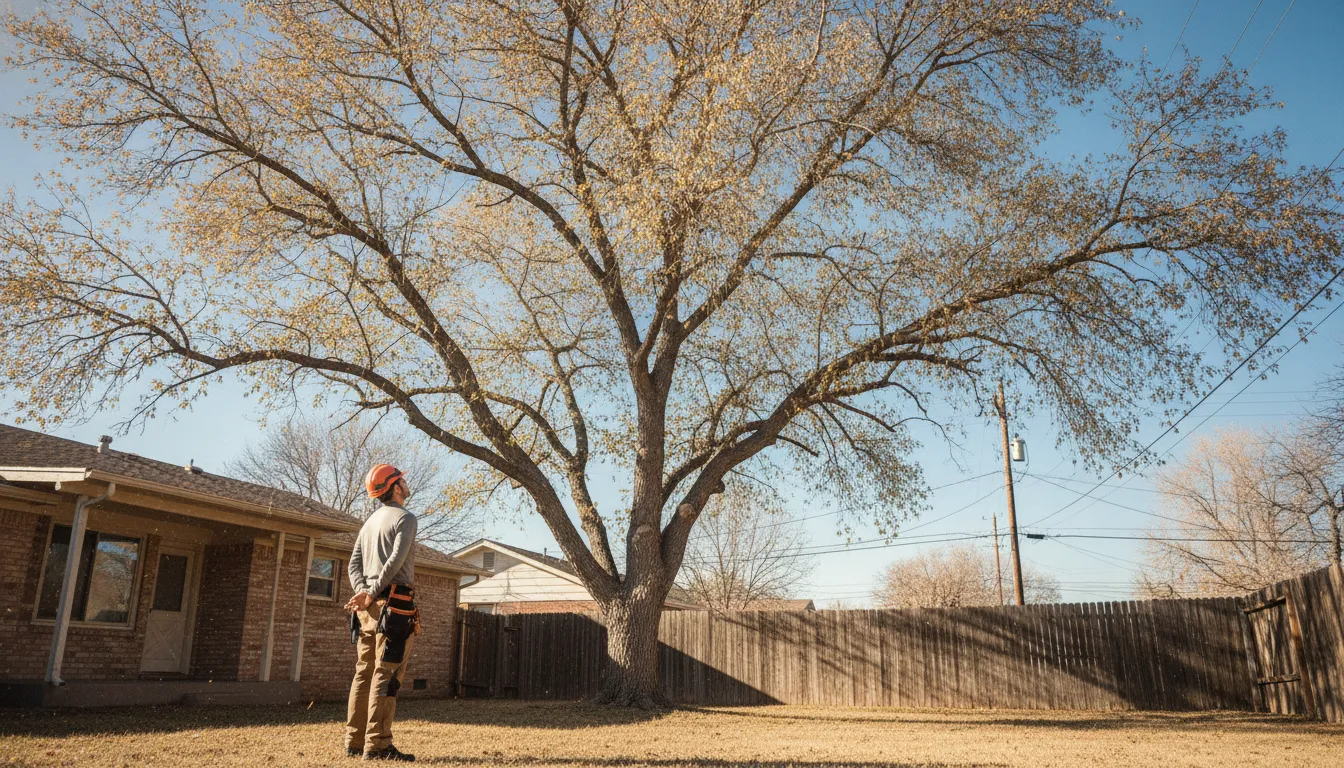
Walk the tree in late fall or winter and note dead wood, cracks, and limbs over targets.
Remove hazards as soon as you see them. Do not save those for March.
Schedule structural cuts for late winter, before buds break, and keep the live-wood removal inside the range above.
Skip fertilizer to "make up" for the cuts. The tree needs its stored energy, not a push of soft growth.
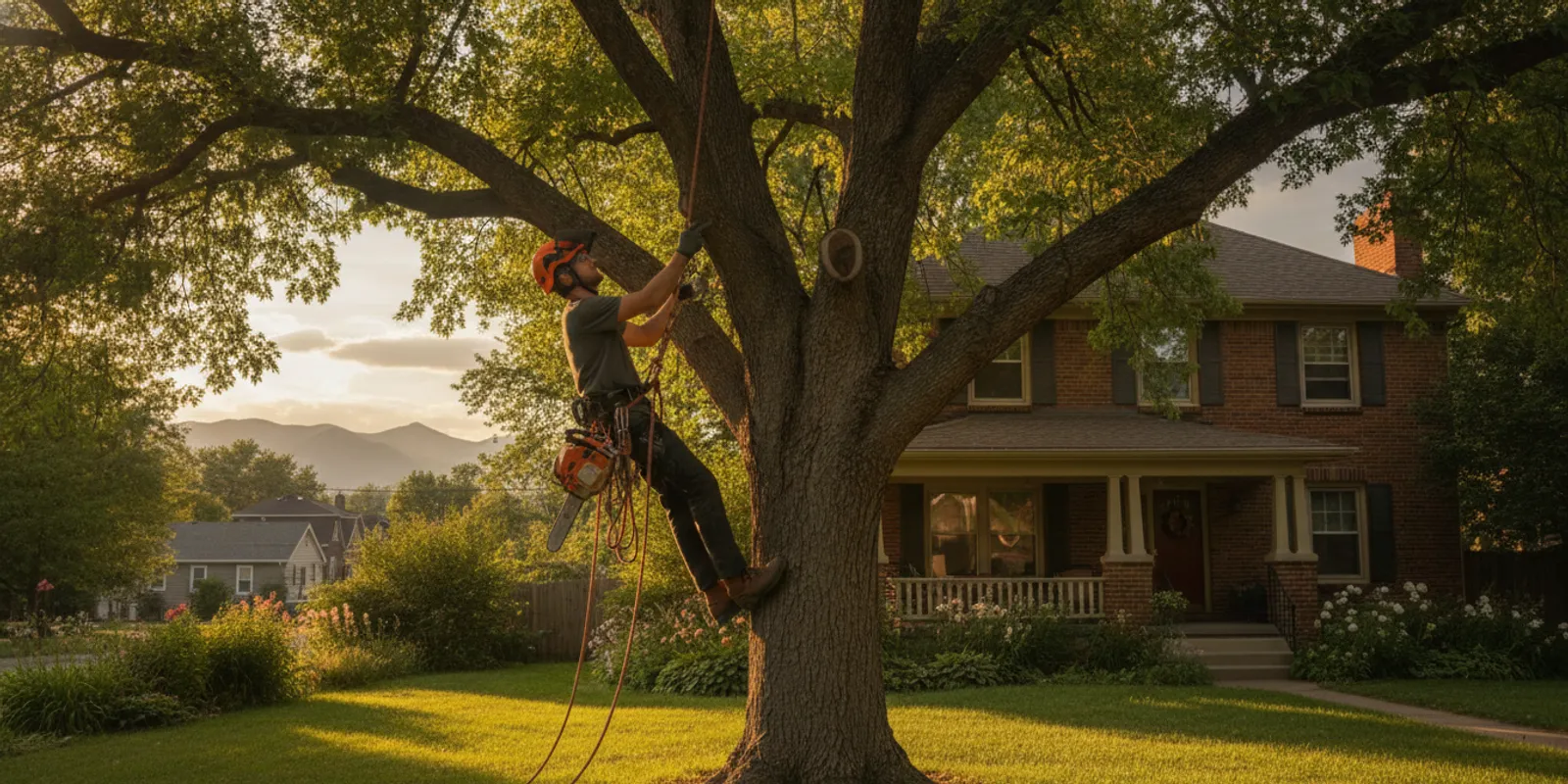
If the job needs a chainsaw overhead or limbs larger than hand tools can handle, call an insured arborist. That is crew work, not a ladder project.
Pueblo County Extension puts the tool line in plain numbers. Hand pruners fit branches under about half an inch, and loppers fit about one to one and a half inches. Anything overhead, or anything that needs a chainsaw, belongs with an insured crew rather than a ladder and a homeowner saw.
Natural Tree Care and Recycling is licensed and insured in the major Denver metro municipalities, and the crew includes ISA Certified Arborists. Aaron Opgenorth, the owner, is one of them. The team has a combined 130 years in the tree industry. That figure is the crew's experience added together, not the age of the company.
Wound paint and tar are not part of a normal timing plan. A clean cut at the branch collar closes better on its own than a coated stub. Sealing a cut can also hold moisture against the wood. Skip the spray unless an arborist names a specific disease reason for that tree.
The same limit applies to topping a tree once so it fits under a wire. If the wire is the problem, the honest choices are directional pruning over more than one year, or removal and a better-sized replacement. Removal and planting are separate decisions. Stump grinding is separate too. None of those come bundled inside a pruning visit.
A short note already on our site, whether there is a wrong time to trim, says the same core thing: winter is often best, and summer pruning still happens. Use that as the short version. Use this page when you need the species and hazard split.
Winter care around the trim is separate. Watering, mulch, and snow load are covered in winter tree care for Colorado yards. Do not treat a pruning visit as a substitute for a deep soak before the ground freezes.
FAQ
Is June too late to prune trees?
June is late for heavy structural pruning on most Front Range shade trees. It is not too late to remove dead or broken wood, or to make a light clearance cut. Save the larger live-wood cuts for the next dormant season unless an arborist sees a reason to act sooner.
What are the three C's of pruning?
People use that phrase for crossing, competing, and crowded branches. Take out limbs that rub, that fight the main leader, or that pack the crown so tightly that air and light cannot move. Those are goals for a dormant-season visit, not a reason to strip the tree.
Can I trim a tree right after I plant it?
Remove only broken or dead twigs at planting. Structural pruning can wait until the tree has rooted and you can see how it grows. Planting time and trimming time are different decisions. When to plant trees in Colorado covers the planting window.
Does a free estimate mean the consult is free?
A free estimate is the offer for looking at the work and pricing it. Not every arborist visit or diagnostic trip is advertised as free. If you want a scheduled look at timing, structure, or a hazard, ask for the estimate and describe the tree.
Fill out the form for a free estimate, or call (303) 803-3850. Phones are answered Mountain Time, Monday through Friday, 8:00 a.m. to 4:30 p.m.
Pick the reason, then pick the week
Trim most shade trees in late winter, before buds break. Move spring bloomers to just after they flower. Handle fire-blight hosts on dry winter days with clean tools. Take dead and broken wood whenever you see it. The week matters less than the reason for the cut, and less than leaving enough live crown for the tree to recover. No one can promise a trim will save a tree.
The services behind that visit, including pruning, removal, planting, and consultations, are listed on the tree services page. Tell us the species, what the limb is doing, and whether anything sits under it. That is enough to set a useful time.